 N環球

China's COMAC CE-25A electric airliner makes first crewed flight
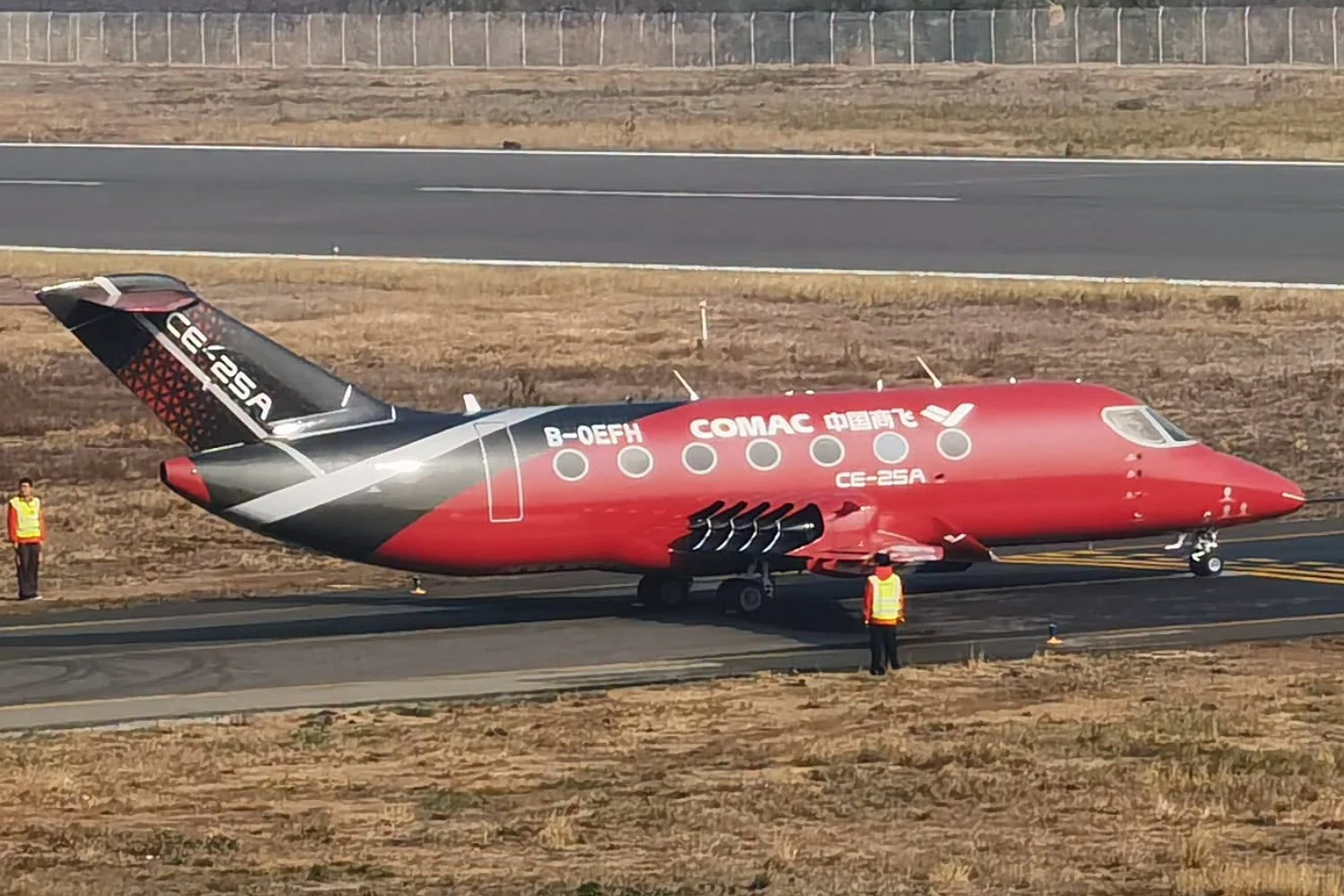
COMAC's CE-25A electric aircraft completed its first flight with people aboard on Saturday in Binzhou, Shandong, carrying two pilots and a flight test engineer. It spent 16 minutes and 38 seconds in the air and covered 60.4 km. China's aviation regulator has accepted its type certification application.
COMAC's CE-25A electric aircraft completed its first flight with people aboard on Saturday (November 14) in Binzhou, Shandong province, carrying two pilots and a flight test engineer. According to Chinese state media citing COMAC, the complete test lasted 57 minutes and 46 seconds, with 16 minutes and 38 seconds in the air covering 60.4 km, and the aircraft operated normally with all parameters meeting requirements. (Image: COMAC / Air Data News)
A 19-seat all-electric design for short intercity routes
The CE-25A is a 19-seat all-electric aircraft with a maximum takeoff weight of about 10 tonnes, a cruise speed of around 300 km/h, a cruise altitude of about 2,400 metres and a range of about 400 km, aimed at short intercity passenger services. Its most unusual feature is a distributed electric propulsion system, with multiple ducted propulsors mounted above the wing instead of the conventional two-engine layout.
Uncrewed flights since February, 19 verification tests
According to COMAC, the CE-25A project was unveiled in 2023 and first flew with a scaled demonstrator. The full-size aircraft made its first uncrewed intelligent flight on February 2, 2026, and subsequently completed 19 autonomous flight verification tests before carrying people aboard. The program brings together COMAC, battery maker CATL and Shanghai Jiao Tong University, among other partners.
Certification review under way; commercial service still to be approved
The Civil Aviation Administration of China has accepted the CE-25A's application for type certification, formally starting the airworthiness review. COMAC describes the flight as the aircraft's first “crewed intelligent flight” but has not detailed how control was divided between the pilots and the automated systems, so it remains unclear how much of the mission was flown autonomously. The aircraft is not yet approved for commercial passenger service.
💬 Comments
No comments yet. Be the first!