 N環球

Delhi chokes on post-Diwali smog as AQI crosses 400 in several areas
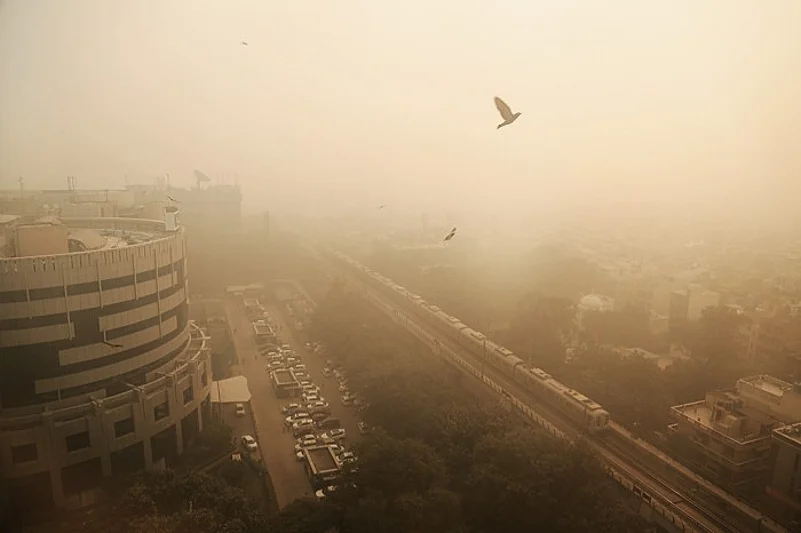
The morning after Diwali, air quality in Delhi deteriorated to the “severe” category at several monitoring stations, with the AQI crossing 400; the city average stood at about 376, rated “very poor.” It was the third-worst Diwali for air pollution since 2021, with Stage III emergency measures in force and severe pollution forecast to persist for days.
Thick smog blanketed New Delhi on Monday morning, November 9, the day after Diwali, as the air quality index (AQI) crossed 400 — the “severe” threshold — at several monitoring stations. According to the Central Pollution Control Board (CPCB), Burari Crossing recorded 441 and Ghazipur 418, while the Indo-Asian News Service reported Sonia Vihar reaching 449. The city's 24-hour average AQI at 4 p.m. on November 8 was 376, rated “very poor,” with visibility sharply reduced.
Third-worst Diwali pollution since 2021
A comparison cited by the Hindustan Times found this year's Diwali air pollution the third-worst since 2021: across six monitoring stations, the peak hourly PM2.5 sub-index averaged 655 in the hour ending 1 a.m. after Diwali. The India Meteorological Department had forecast “severe” air pollution, above 400, for both November 8 and 9, and the Air Quality Early Warning System expects severe conditions to persist for several days.
Stage III emergency measures in force as fireworks continued past the deadline
The Commission for Air Quality Management (CAQM) invoked Stage III of the Graded Response Action Plan on Friday, three days ahead of Diwali, bringing stricter vehicle restrictions, a halt to construction and hybrid learning for primary school students. Despite a Supreme Court direction that fireworks end by 10 p.m., residents continued bursting them well past the deadline in several areas; reports said pollutant levels in some neighbourhoods exceeded World Health Organization limits by more than 50 times. The Delhi Pollution Control Committee's website stopped displaying live readings from several monitoring stations for a few hours.
Residents: “Even the sun is not clearly visible”
Residents told the Indo-Asian News Service that even the sun was not clearly visible, blaming stubble burning in Punjab, Uttar Pradesh and Haryana as well as fireworks. Authorities have advised people to limit outdoor activity. Diwali fell on November 8; Delhi's average AQI that day was 376, up slightly from 369 the previous day.
💬 Comments
No comments yet. Be the first!