 N環球

Delhi's toxic smog overwhelmed pollution monitors, leaving gaps in official data
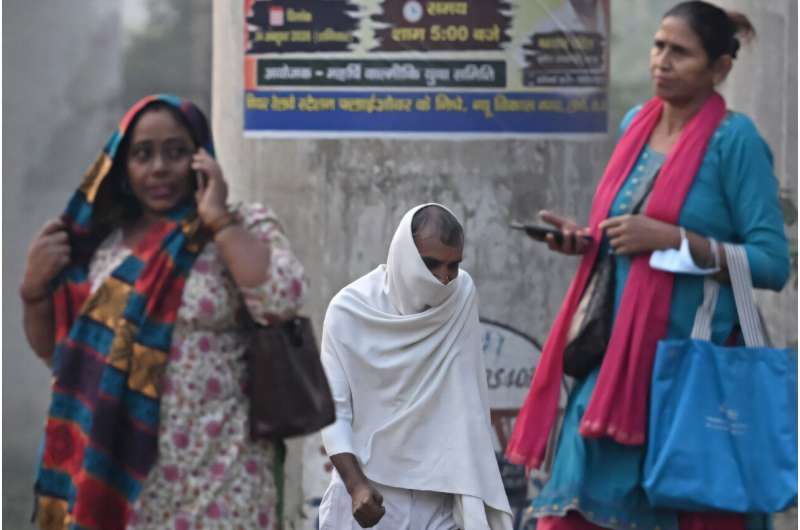
India's pollution regulator admitted that PM2.5 levels during Diwali fireworks exceeded monitors' measurement limits, leaving hours-long gaps in official readings and drawing accusations of data manipulation.
India's air pollution monitors were overwhelmed this week by toxic smog so severe that concentrations exceeded their upper measurement limit, equivalent to 66 times the World Health Organization's recommended daily maximum, regulators said. Official air quality data also went missing for several hours at the worst of the pollution.
Monitors capped at 1,000; over-range readings discarded
The Central Pollution Control Board (CPCB) said in a statement late Tuesday that the particulate matter analysers installed when the National Air Quality Index was introduced in 2015 were calibrated to measure concentrations of up to 1,000 micrograms per cubic metre. The WHO recommends a daily maximum of 15 micrograms per cubic metre for PM2.5. The automated data validation system treats hourly readings beyond the calibrated range as out of range and does not use them in its calculations. "During extreme episodes, which are occasional like Diwali firecracker bursting, this may appear as a data gap at the particular station concerned," the board said.
Gap coincided with the Diwali fireworks peak
The gaps appeared for several hours overnight Sunday into Monday, just as pollution surged with a barrage of fireworks for Diwali. Opposition politicians accused the authorities of deliberately allowing the gaps. "The government which shuts down air quality monitoring stations on the night of Diwali, the government that does data fraud, how will you trust such a government?" Aam Aadmi Party Delhi president Saurabh Bharadwaj said in a video posted on X. Senior Congress lawmaker Ajay Maken asked in a social media post: "If Diwali night's PM2.5 is not in the record, who will answer for that air?" The CPCB rejected accusations of deliberate underreporting, saying the gaps reflected "differences in measurement of pollutant concentration" rather than an attempt to conceal pollution.
Readings hit 879 once monitors resumed, 58 times the WHO limit
When monitors resumed reporting, around eight hours after the fireworks peaked, readings hit 879 micrograms per cubic metre in the Mandir Marg locality, according to monitoring organisation IQAir, citing data from a city government station — more than 58 times the WHO daily limit. Delhi's overall Air Quality Index stood at 308 on Wednesday morning, in the "very poor" category, with 29 of 59 monitoring stations recording "very poor". The India Meteorological Department has forecast fog or mist in the early mornings from November 11 to 16. Sources: AFP, IANS.
💬 Comments
No comments yet. Be the first!