 N環球

US Proposes Tariffs of Up to 20% on Singapore Goods; Singapore Says It Is 'Deeply Disappointed'
The Office of the US Trade Representative announced on November 25 that it proposes tariffs of up to 20% on Singapore's exports to the US, falling to 10% if the two sides reach a reciprocal trade agreement. Singapore's government disagreed with the findings and said it was deeply disappointed.
The Office of the US Trade Representative (USTR) announced on November 25 that, under Section 301 of the Trade Act of 1974, it proposes tariffs of up to 20% on all goods from Singapore, calculated net of existing Section 301 tariffs, with exemptions for certain goods. The rate could fall to 10% if Singapore reaches an Agreement on Reciprocal Trade with the US or responds to the investigation's findings through other negotiations. Singapore's government responded on November 26, disagreeing with the US findings and saying it was "deeply disappointed by the proposed actions targeting Singapore".
An eight-month probe covering 14 economies
The investigation into structural excess capacity and production was launched on March 11, 2026, covering 16 economies. USTR said it received 1,070 written comments and heard testimony from nearly 140 witnesses. On November 25, it determined that the acts, policies and practices of 14 economies linked to structural excess capacity were unreasonable and burdened or restricted US commerce; no determinations have been made for Mexico or Norway for now. For Singapore, USTR cited industrial plans, financial repression, savings policies that suppress domestic consumption, inadequate labour protections, financial support for key sectors, and a failure to address global excess capacity, including through imports and foreign direct investment from non-market economies.
What is in scope
USTR highlighted electronics and semiconductors, health and petrochemicals as the Singapore sectors of concern. Some goods would be exempt, and products subject to Section 232 tariffs — steel, aluminium, copper, wood, passenger vehicles and light trucks, patented pharmaceuticals and semiconductors — fall outside this proposal. Singapore's proposed 20% is higher than the 18% proposed for Malaysia, Indonesia, Thailand and Cambodia; China faces up to 20%, with a 40% alternative rate, while the EU, Japan, South Korea, Switzerland and Taiwan face up to 15%.
Singapore: findings ignore its economic structure
Singapore's Ministry of Energy, Trade and Industry said in a statement on November 26 that USTR's findings failed to account for Singapore's economic structure. Singapore's global trade surplus reflects its outward-oriented, market-driven economy and its role as a trusted hub for commerce and trade, the ministry said, adding that it will urge Washington to reconsider the proposed actions.
Not Singapore's first Section 301 tariff
In a separate Section 301 investigation into forced labour, Singapore has faced an additional 12.5% tariff since July 24, 2026, covering about one-third of its domestic exports to the US, worth about S$9.5 billion a year. The excess-capacity probe is the second Section 301 action targeting Singapore.
Procedure and timetable
The proposed tariffs have not taken effect, and no effective date has been set. Interested parties must file written comments and requests to appear at public hearings by January 5, 2027; the hearings open on January 25, 2027 at the US International Trade Commission in Washington. Final rates will depend on the public comments and the hearings. (Sources: Singapore Business Review; Office of the US Trade Representative; Singapore Ministry of Energy, Trade and Industry)
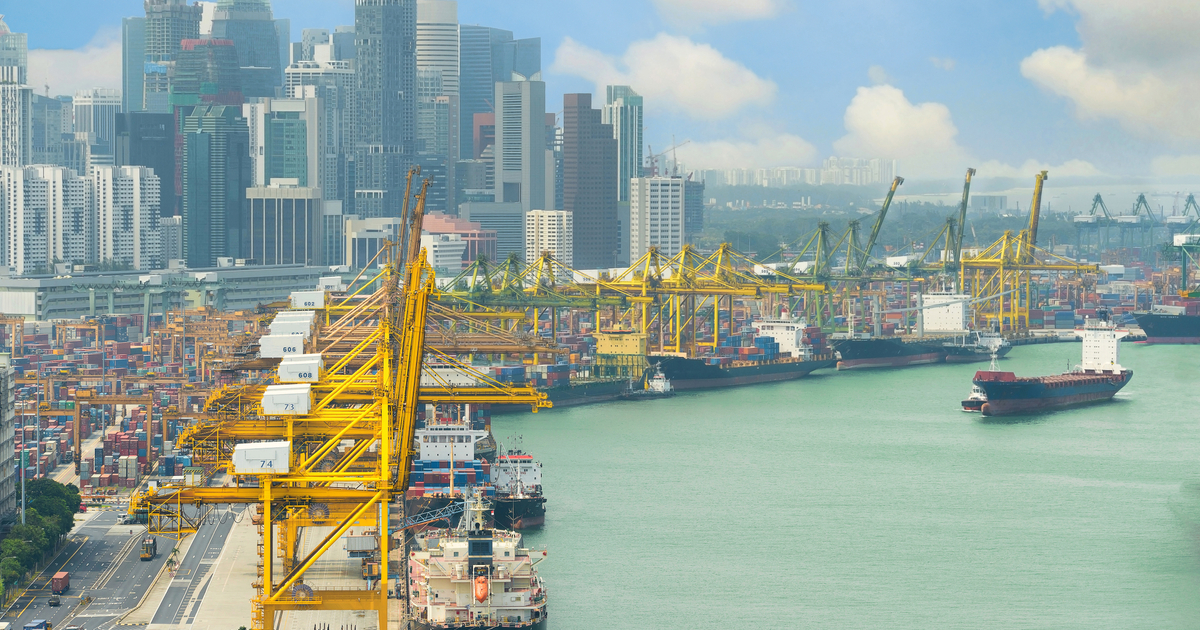
File photo: the Port of Singapore. Photo credit: FinanceAsia / Shutterstock.
💬 Comments
No comments yet. Be the first!