 N環球

Super Beaver Moon rises tonight, first of four supermoons in a row
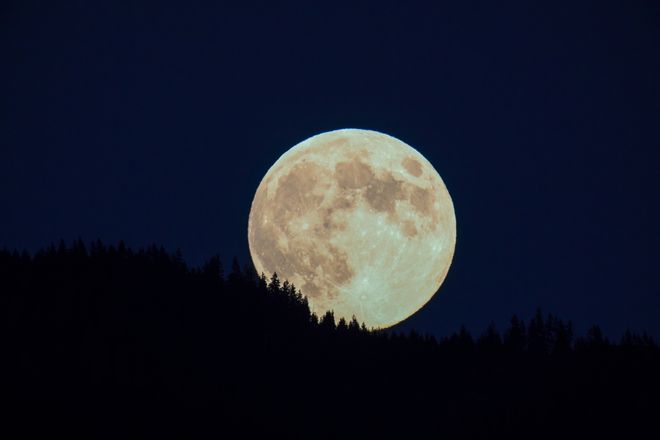
November's full moon reaches its crest at 9:54 a.m. Toronto time on Tuesday, near perigee, making it a supermoon; it rises in the east after sunset and stays visible all night in Taurus, near the Pleiades and Hyades star clusters.
November's full moon — traditionally called the Beaver Moon — reaches its crest at 9:54 a.m. Toronto time on Tuesday (14:54 UTC), near perigee, making it a supermoon. It rises in the east shortly after sunset tonight and stays visible all night.
Photo caption: File photo: a supermoon. (Photo: Discover Magazine)
The first supermoon of the winter season
This is the first of four supermoons in a row in 2026–27. The Moon reaches perigee at 21:00 UTC on November 25, about 359,000 km (223,000 miles) from Earth, roughly 27,000 km closer than a typical full moon. A supermoon appears up to 8% wider and about 16% brighter than an average full moon. Coastal areas may see higher-than-usual tides, sometimes called king tides, around a supermoon.
In Taurus, beside the Pleiades
Tonight the full moon lies in Taurus, between the Pleiades and the Hyades star clusters, near the bright star Aldebaran. November's full moon is called the Beaver Moon because beavers in North America prepare their dens and stock up on food for the cold months ahead; it is also known as the Frosty Moon. The moon's glare makes faint clusters like the Pleiades hard to spot — try blocking the moon behind the edge of a building to find them.
No equipment is needed; the supermoon is visible to the naked eye across North America tonight, weather permitting.
💬 Comments
No comments yet. Be the first!