 N環球

US overseas compute rules squeeze Chinese AI firms as analysts warn gap will widen
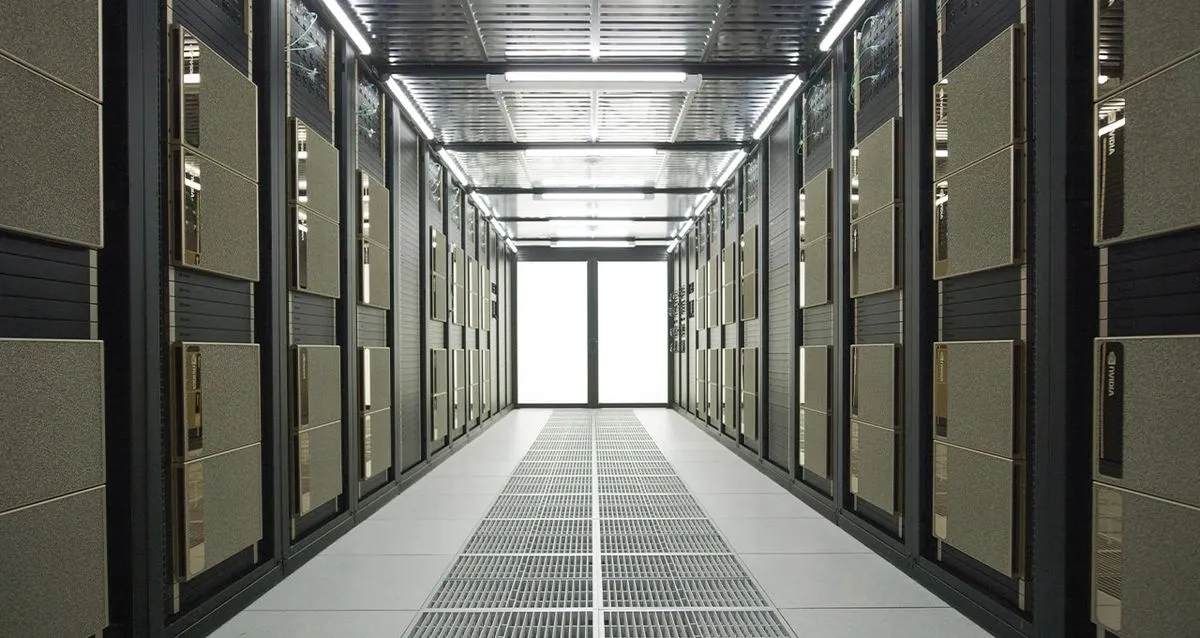
A US Commerce Department rule that took effect on November 19 requires licences for advanced computing supplied to Chinese firms through overseas data centres. Maybank and S&P Global warned on November 25 that asset-light Chinese AI developers face the biggest hit, with domestic chips unable to fill the gap in the near term.
A US Commerce Department interim final rule that took effect on November 19 is cutting off Chinese artificial intelligence companies from rented advanced computing overseas. Maybank Investment Bank and S&P Global Ratings warned in reports on November 25 that AI developers that rely on external computing face the biggest impact, while domestic chips cannot fill the gap in the near term — a divide within China's AI industry that could widen further.
What the new rule closes off
Under the rule, shipments or transfers of advanced AI chips and servers into or within Indonesia, Malaysia, Singapore, Thailand and Brazil require a licence. A separate worldwide provision, Section 744.24, requires a licence when data centres provide more than 12 million aggregate total processing performance to companies headquartered, or whose ultimate parent is headquartered, in China or other restricted jurisdictions. S&P estimates the threshold could be reached by a facility of about one megawatt. Existing compliant operations have a 90-day transition period to secure licences. Computing used for commercial recommender systems, such as ranking in e-commerce or social media, is exempt, though operators must notify the Bureau of Industry and Security (BIS) of such use.
The companies most exposed
Maybank named Moonshot AI and MiniMax as the most exposed, because both rely heavily on rented computing and hold little captive chip capacity. Moonshot has no in-house chip supply, and its 2.8-trillion-parameter model exceeds what eight-card H200 server configurations can handle; MiniMax raised research and development spending by 139% year on year to $297 million in the first half of 2026, driven by cloud-based training, without making significant capital commitments. If licences for their offshore arrangements are denied after the transition period, both may have to rent scarce domestic supernode capacity from large hyperscalers that are also their competitors. Moonshot has already cancelled an Indonesia computing lease, as this site reported on November 20. ByteDance is also exposed: its TikTok feed-ranking operations could qualify for the commercial recommender exemption, but generative AI training, including Seed and Seedance, would remain restricted. Maybank said ByteDance is the only large Chinese platform without a commercialised in-house accelerator, making the loss of overseas custom-chip manufacturing routes a significant setback.
Domestic chips still fall short
Domestic alternatives are advancing, but Maybank said China's ability to substitute foreign chips remains much stronger in inference than in training. Alibaba has delivered more than 560,000 Zhenwu accelerators in total and ranked second among domestic vendors in the first half of 2026, shipping more than 100,000 cards; its Zhenwu V900, with 216GB of memory and 1,200GB/s chip-to-chip bandwidth, is targeted for mass production in the first quarter of 2027. Baidu's AI accelerator subscription revenue rose 128% year on year in the third quarter, and Z.AI is already running production inference on more than 100,000 domestic chips, having ported its computing kernels to Huawei's Ascend 950 from the fourth quarter. The gap with Nvidia remains substantial: citing EpochAI estimates, Maybank said Huawei's projected 2026 output was equivalent to 880,000 Nvidia H100 units, against Nvidia's 23 million — less than 4%. The usable high-bandwidth memory supply gap was estimated at 73 times in 2026. DeepSeek's order for 160,000 Ascend 950DT chips faces a waiting period of more than a year, and domestic demand far exceeds available supply.
Data centres and cloud providers under pressure too
S&P said data centres in Asia-Pacific are the most vulnerable, with facilities in Singapore, Malaysia, Indonesia and Thailand facing new licensing requirements to procure advanced chips. Cloud and 'neo cloud' providers that own or control GPUs and provide computing access face the most direct impact, risking underutilised GPUs and greater refinancing pressure. S&P added that even if the rule were reversed tomorrow, risk perceptions would not snap back: operators and lenders have seen firsthand how US policy can affect projects and customers beyond its borders, and will stay more cautious about new developments. The market had already begun adjusting: Maybank noted Nvidia had reportedly told cloud partners verbally to keep at least 51% of their services for non-Chinese customers, and the Oracle-Tencent arrangement has been cancelled.
What to watch next
The 90-day window is the key test: affected companies and data centres must secure licences within it, and the outcome will decide how much of the overseas computing channel survives. Maybank said investors should watch cloud-rental pricing and AI cloud margins at Alibaba and Baidu, MiniMax's cost of sales, and prospectus disclosures from T-Head and Kunlunxin. On custom chips, the rule also closes a route that let designers manufacture advanced logic chips at overseas foundries without a licence, based on attestations that the chips had fewer than 30 billion transistors — affecting ByteDance's reported SeedChip talks with Samsung, its earlier Broadcom and TSMC ASIC project, and overseas manufacturing plans for Alibaba's T-Head Zhenwu V900 and Yitian processors and Kunlunxin's M100. SMIC, already at 98% capacity utilisation in the third quarter, cannot absorb the extra orders in the near term. (Photo: file photo of GPU server racks in a data centre, unrelated to this story.)
💬 Comments
No comments yet. Be the first!