 N環球

Supreme Court lets Big Bend border wall work resume, pausing Texas judge's injunction
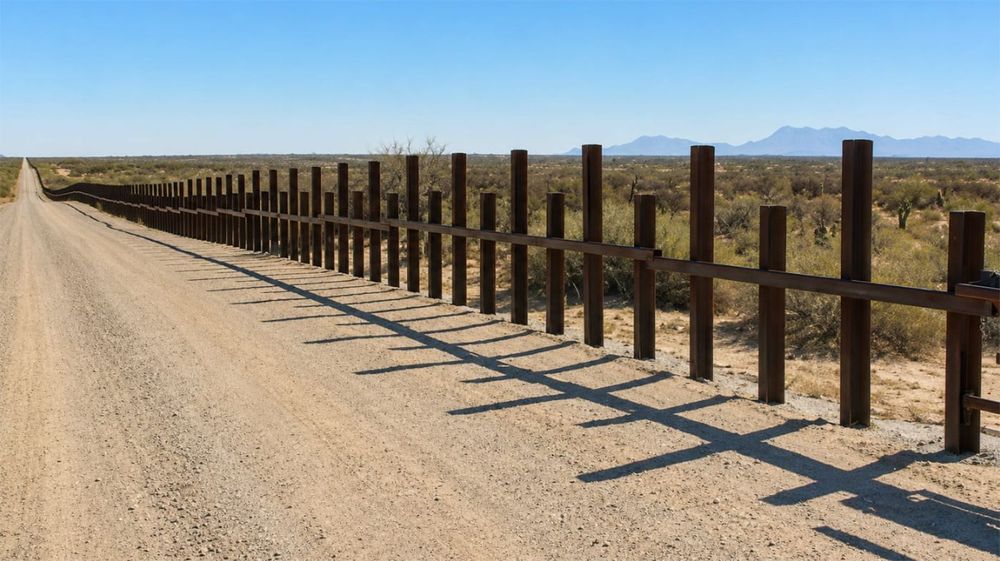
The U.S. Supreme Court on November 9 granted the government's emergency request to pause a Texas federal judge's injunction against border wall construction in the Big Bend region, allowing work to resume. The court said the government is 'exceedingly likely' to win on jurisdiction; only Justice Jackson would have denied the request.
The U.S. Supreme Court on November 9 granted the federal government's emergency application to pause a Texas federal judge's injunction against border wall construction in the Big Bend region, allowing work on border barriers and patrol roads to resume. In an unsigned per curiam opinion, the court said the government is 'exceedingly likely to prevail' on jurisdiction; of the nine justices, only Justice Ketanji Brown Jackson noted that she would have denied the government's request.
What the ruling does — and does not — decide
The case is Mullin v. Friends of the Ruidosa Church, No. 26A560. The court granted only a stay, not a final ruling on the merits. The injunction is paused while the government seeks Supreme Court review; if the court declines to take the case, the stay ends automatically. The court also declined a separate government request to summarily reverse the lower court's order.
The dispute: waiver power and the 'major questions' doctrine
The dispute turns on Section 102 of the Illegal Immigration Reform and Immigrant Responsibility Act of 1996, which authorises the Secretary of Homeland Security to build border barriers and roads to deter illegal crossings and to waive 'all legal requirements' to speed construction, while limiting judicial review of waiver decisions to constitutional claims. The Department of Homeland Security issued three waivers this year covering the Big Bend Sector designated by Customs and Border Protection — 517 miles of Rio Grande frontage, about a quarter of the southwest border — with construction spanning more than 300 miles.
The challengers argued the waivers exceeded the statute because it permits them only in areas of high illegal entry, while the Big Bend Sector has among the lowest crossing rates on the border. U.S. District Judge Kathleen Cardone of the Western District of Texas issued a preliminary injunction on October 2 halting the work. The Supreme Court's opinion said the government is exceedingly likely to show the district court lacked jurisdiction to hear the so-called major-questions-doctrine claim — writing that there is no such thing as a 'constitutional' major-questions claim: the doctrine is a tool for reading statutes, not a constitutional rule, and cannot open the door to judicial review.
Background: three waivers, nearly $500,000 a day
The three waivers were issued between February and July 2026 — one by former Secretary Kristi Noem and two by current Secretary Markwayne Mullin — waiving a range of environmental and conservation laws. Construction began near Santa Elena Canyon on August 6 and paused around August 17 as the injunction took effect. The government told the court the halt was costing nearly $500,000 a day in unrecoverable expenses. Customs and Border Protection says the project includes vehicle barriers, patrol roads, cameras and sensors. The challengers are the Center for Biological Diversity, a local river guide and a group working to preserve a historic church in Ruidosa, Texas.
What happens next
The lawsuit itself continues: the injunction is only paused, and the merits — whether the waivers are lawful — remain undecided, with the challengers free to press their claims in the lower court. The Center for Biological Diversity said after the ruling that the decision does not mean the waivers are lawful. This site reported Judge Cardone's injunction on October 4. Sources: U.S. Supreme Court opinion (No. 26A560, November 9, 2026); SCOTUSblog; Reuters.
💬 Comments
No comments yet. Be the first!