 N環球

SpaceX Catches Starship Upper Stage With Tower Arms for First Time as Booster Is Lost
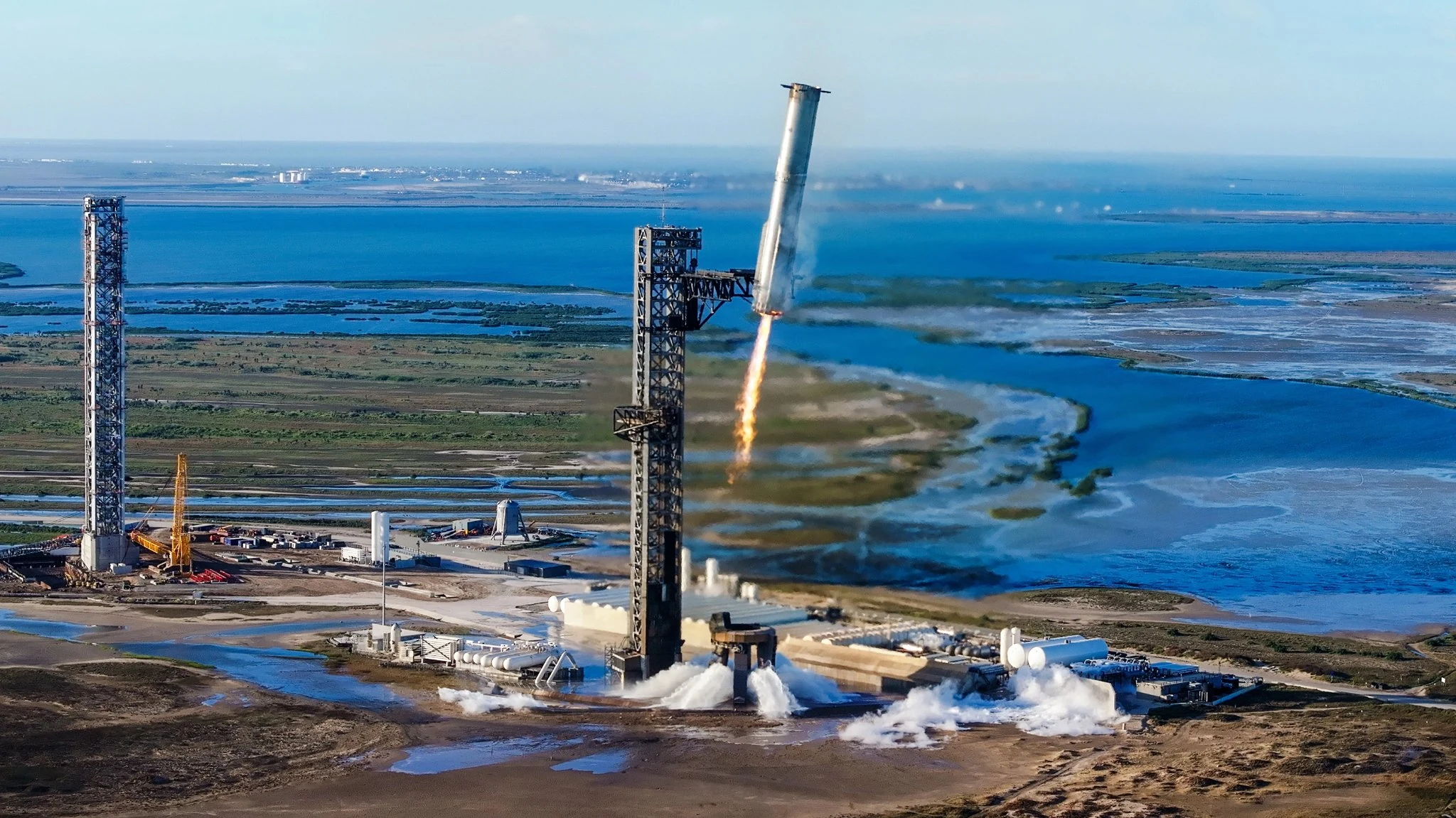
Ship 42 spent about 22 and a half hours in orbit and circled Earth 14 times before being caught by the Mechazilla tower arms at Starbase on Saturday afternoon — the first recovery of a Starship upper stage returning from orbit. The Super Heavy booster was lost over the Gulf of Mexico.
SpaceX made history on Saturday (November 14): Ship 42, the upper stage of its Starship rocket, was caught by the mechanical "chopstick" arms of the launch tower at Starbase in Texas after about 22 and a half hours in orbit — the first time a Starship upper stage returning from orbit has ever been recovered. The Super Heavy booster was lost in the same flight, exploding over the Gulf of Mexico, so the planned double catch was only half completed. (File photo: a Super Heavy booster previously caught by the tower arms. Image: SpaceX.)
Fourteen orbits in 22 hours
Flight 15, the fifteenth test flight of the Starship system, lifted off from Starbase at 5:47 p.m. ET on Friday (November 13), using the newer Starship V3 design — Super Heavy Booster 22 stacked with Ship 42. After separating from the booster, the ship reached orbit, deployed 26 third-generation Starlink V3 satellites and circled Earth 14 times. It was only Starship's second trip to orbit, after Flight 14 on September 28.
At about 3:23 p.m. ET on Saturday, Ship 42 fired a single engine to leave orbit, plunged back through the atmosphere and through thick cloud, reignited three engines to flip itself vertical, and settled between the tower's two arms at about 4:20 p.m. ET, its engines shutting down as it hung in the chopsticks. SpaceX confirmed the moment on X within a minute: "Mechazilla catches Starship!"
Booster veers off course and is destroyed
Booster 22 was lost about six and a half minutes after liftoff. SpaceX said preliminary data suggested its boostback burn ended early after a low fuel-mass alarm; the guidance system found the booster outside the calculated position for capture, automatically called off the catch and diverted it to a backup area over the Gulf of Mexico, where it was destroyed. The company is still investigating the cause of the fuel shortfall. SpaceX had caught Super Heavy boosters three times before, but the ship itself — the half of the rocket that goes to orbit and will one day carry crew — had never been caught.
A step closer to full reusability
The catch is a key step toward SpaceX's goal of "rapid reusability": recovering the whole rocket is what would sharply cut launch costs and raise launch rates. Bernstein analysts called demonstrating Starship's reusability "the most important step for SpaceX to support a multitrillion-dollar valuation" and said the company is "essentially 10 years ahead of its competitors" in this area. SpaceX president Gwynne Shotwell said last month that a recovered upper stage could fly again early next year. NASA also welcomed the successful recovery; Starship is central to NASA's Artemis Moon programme and to Elon Musk's Mars ambitions. SpaceX has not announced a date for the next flight, so the double catch will have to wait.
💬 Comments
No comments yet. Be the first!