
Asia · Environment / disaster ·
Nepal says glacier flood killed at least 1,450, seeks international grants for recovery
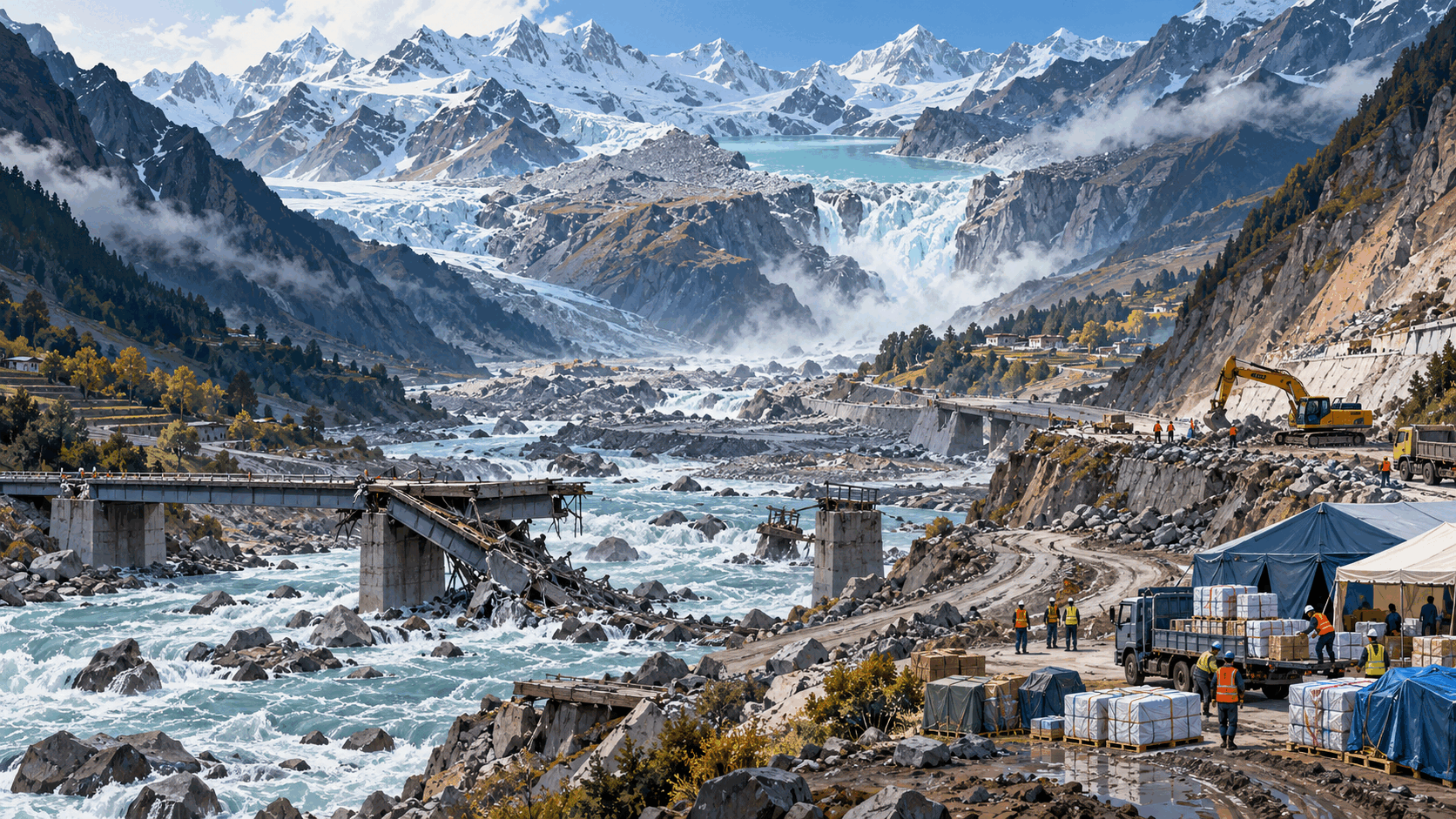
Nepal's Prime Minister Balendra Shah told the UN General Assembly on September 24 that the late-August glacier flood had killed at least 1,450 people and left more than 6,000 missing. Recovery needs were estimated at about 10% of GDP, and Nepal asked for grants rather than additional debt.
Why it matters
The disaster has created national-scale humanitarian and fiscal pressure while exposing gaps in cross-border Himalayan glacial-lake monitoring and warning systems. Casualty and missing-person figures may still change. The new development is Nepal's first public UN-level quantification of reconstruction needs and its specific request for international grants and regional cooperation.
Full report
Reuters reported at 02:06 UTC on September 25 that Prime Minister Balendra Shah told the UN General Assembly in New York that the glacier flood four weeks earlier had killed at least 1,450 people and left more than 6,000 missing. Search and recovery operations were continuing. The figures came from Nepal's head of government and may change as operations progress.
Shah said a glacier collapse near Nepal's border with China's Tibet Autonomous Region in late August triggered landslides and a flash flood that swept through downstream valleys, destroying roads, bridges, schools, homes and livelihoods. The government estimated recovery and reconstruction needs at about 10% of Nepal's gross domestic product.
Nepal asked the international community to support rebuilding mainly through grants rather than loans, arguing that large new borrowing would deepen the debt burden on a country already hit by climate-driven infrastructure losses. Reuters also reported that the World Bank had made up to $170 million in emergency financing available this week for response and early recovery.
Shah proposed an urgent Himalayan mechanism linking Nepal, India and China to share satellite data, monitor glacial lakes, strengthen early-warning systems and coordinate cross-border disaster response. This remains a policy proposal; the three countries have not announced a signed or operational mechanism.
This report does not say a second flood occurred on September 25. The core new development is Nepal's UN disclosure of official casualty, missing-person and reconstruction estimates, along with a formal appeal for grant aid and cross-border warning cooperation. The accompanying image is an N Globe editorial illustration, not a flood-site photograph.
Verification status: developing. News value: A-level major news. Origin region: Asia (Nepal). Primary section: Environment / disaster. Related regions: China, Asia and World. Source time: September 25, 2026, 02:06 UTC. Report time: September 25, 2026, 03:08 UTC.
This report is an original summary based on verified sources, not a verbatim reproduction.
READER COMMENTS
Share your view on this story
Loading comments…