 N環球

AI boom turns chip packaging into the next semiconductor battleground
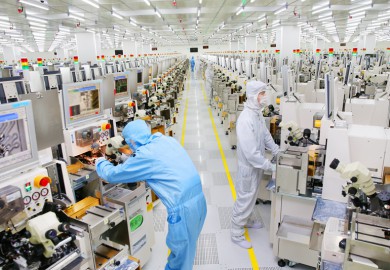
Demand for AI chips is outstripping packaging capacity, with TSMC's CoWoS technology the key bottleneck; advanced packaging revenue is forecast to overtake traditional packaging for the first time in 2026.
The global race to build AI infrastructure is pushing chip packaging to the front line of the semiconductor industry. Demand for artificial intelligence chips now outstrips available packaging capacity, and companies from Nvidia and AMD to firms in Taiwan are expanding production, Reuters reported on November 6. Advanced packaging has become a critical bottleneck in turning out the world's most powerful processors. (Photo: chip packaging assembly line, file photo.)
TSMC dominates the most advanced CoWoS technology
Taiwan's TSMC, the world's largest contract chipmaker, dominates the most sophisticated advanced packaging technology, including chip-on-wafer-on-substrate, or CoWoS. The technology links separate pieces of silicon, such as processors and memory chips, on a shared base so they can work together at high speed. It is widely used by Nvidia, AMD and Broadcom, as well as cloud companies developing their own AI chips.
Advanced packaging revenue to overtake traditional packaging in 2026
Research firm Yole Group forecasts that revenue from advanced packaging will overtake that earned via the traditional route for the first time in 2026, with capital spending on the technology expected to near $28 billion. Former Intel chief executive Pat Gelsinger estimated that advanced packaging could eventually account for as much as half the value of a chip product — some of today's graphics and central processing units already integrate 10 or more chips, sometimes as many as 20.
Nvidia funds expansion; Broadcom bets on panel-level packaging
Nvidia is providing billions of dollars in financing to expand CoWoS packaging capacity at Siliconware Precision Industries (SPIL), a unit of Taiwan's ASE Technology, an industry executive familiar with the matter told Reuters. Powertech Technology, also known as PTI, is betting on panel-level packaging, which uses larger rectangular panels instead of round wafers as the chip packaging platform, and plans to invest $400 million in an advanced packaging joint venture with Broadcom in Singapore, with production possibly beginning in 2028.
More than a dozen industry executives and analysts interviewed by Reuters said packaging matters more than ever because AI chips need to shuffle vast amounts of data between processors and nearby memory, and equipment makers are developing new tools for the task. Once an unglamorous corner of the supply chain, advanced packaging has become one of the deciding factors in the AI race.
💬 Comments
No comments yet. Be the first!