 N環球
N環球 
Anand delivers Canada's UNGA statement, making the case for a 'middle powers strategy'
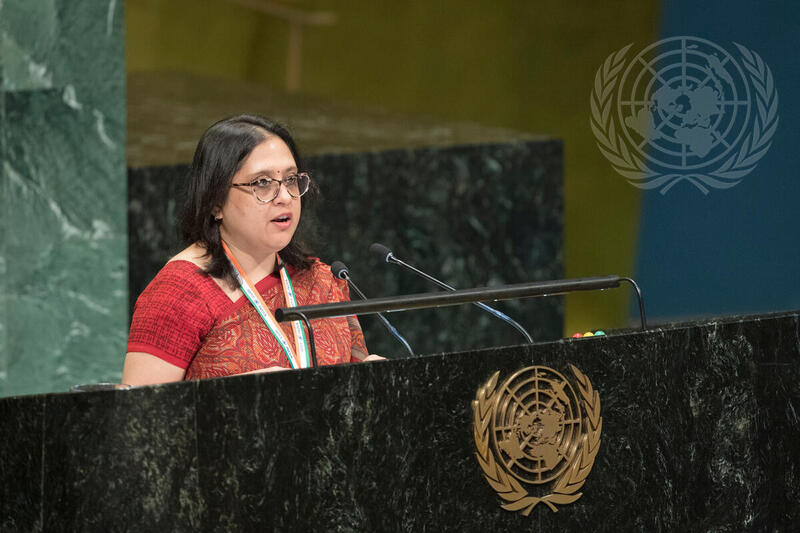
Foreign Minister Anita Anand delivered Canada's national statement to the UN General Assembly on Saturday, the centerpiece of Ottawa's new "middle powers strategy" aimed at cutting dependence on the United States. She spoke in place of PM Mark Carney for the second straight year.
Canada's Foreign Affairs Minister Anita Anand delivered Canada's national statement to the General Debate of the 81st United Nations General Assembly in New York on Saturday, September 26, 2026. For the second consecutive year, she took the UN podium in place of Prime Minister Mark Carney, who had a scheduling conflict.
Why it matters
Anand's speech is the centerpiece of Canada's week at the UN and the public face of Ottawa's new "middle powers strategy" — a plan to reduce Canada's dependence on the United States by doubling non-U.S. trade within a decade. With roughly 70% of Canadian exports going to the U.S. amid an escalating trade war, the strategy is one of Carney's most consequential foreign-policy bets.
Full report
Global Affairs Canada said Anand's statement would "set out Canada's foreign policy priorities and its approach to key geopolitical issues." According to the Associated Press, the message was "very much about implementing the middle power strategy," which Anand described as "principled pragmatism": like-minded mid-sized countries pooling their weight as the rules-based order strains.
Earlier in the week, Anand told reporters the address would cover Ukraine, the Middle East and Arctic sovereignty. Canada has been a leading voice on Gaza and the two-state solution — Prime Minister Carney announced $100 million in new aid for Palestine earlier in the week — and the Arctic has grown urgent after the U.S. signed an Arctic security deal with Denmark and Greenland. President Trump has repeatedly floated annexing both Canada and Greenland, partly for their Arctic presence.
Canada has already taken concrete steps toward diversification: this year it became the first non-European country to join the EU's €150-billion SAFE defence procurement programme, giving Canadian firms access to joint European defence contracts.
Trump, for his part, did not mention Canada in his own UNGA address on Tuesday, focusing instead on U.S. economic and military might.
💬 Comments
No comments yet. Be the first!