 N環球
N環球 
Von der Leyen Invites Canada to Become the EU's First “Associate Member”
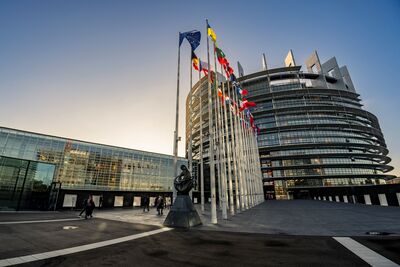
In her September 16 State of the Union address, Ursula von der Leyen invited Canada to become the EU's first “associate member” — a landmark overture drawing a tariff threat from Trump and a Montreal summit on October 29–30.
Why it matters
"I would like to work with you on opening the door for Canada to being the first associate member of the European Union." With that line — delivered in her State of the Union address in Strasbourg on September 16, with Prime Minister Mark Carney in the chamber — Ursula von der Leyen floated the most ambitious idea yet for anchoring Canada to Europe as Washington's tariff war pushes Ottawa to diversify away from the U.S. market.
Full report
Von der Leyen said the bloc wants to take the relationship with Canada “to the highest level possible,” moving “from CETA to an Alliance for the Future to create a common prosperity and economic security space.” The agenda she named spans intelligent manufacturing, a technology alliance, integrated defence industrial bases, the Arctic, energy, critical minerals and batteries, plus AI, quantum, cyber and economic security. Trade in goods between the EU and Canada has grown 75 per cent in less than a decade under CETA, the free-trade deal that took provisional effect in 2017.
The concept is not defined in EU treaties: associate membership would likely mean a structured partnership without voting rights in EU institutions or an obligation to adopt all EU law, and any deal would need approval from the EU's 27 member states. Canada's ambassador-designate to the EU, Jonathan Wilkinson, said Ottawa had discussed the idea with European officials beforehand and “knew that that was something that was on the table.” On September 17 Carney addressed the European Parliament and welcomed the proposal, saying it was not intended as a “third pole” against major powers, and that the proposal would be debated and voted on in the Canadian Parliament.
The reaction from Washington was sharp. President Trump — who has floated making Canada the 51st state — called the idea “laughable,” suggested the EU's move could be a “hostile act,” and said he would impose heavy tariffs on Europe if he judged the intent to be bad, the AP reported. Canada is seeking to reduce its dependence on the United States, which takes roughly 70 per cent of its exports. The idea is expected to be discussed further at the Canada–EU Summit in Montreal on October 29–30.
💬 Comments
No comments yet. Be the first!