 N環球

Ford and Unifor Urge Ottawa to Exempt Canadian Automakers from Tailpipe Penalties
Ontario Premier Doug Ford and Unifor National President Lana Payne issued a joint statement calling on Ottawa to exempt Canadian automakers from passenger-vehicle greenhouse gas penalties, in exchange for commitments to keep production in Canada.
Ontario Premier Doug Ford and Unifor, Canada's largest private-sector union, issued a joint statement on Thursday, November 26, calling on the federal government to exempt Canadian automakers from penalties for failing to meet passenger-vehicle greenhouse gas standards, in exchange for commitments to preserve auto production in Canada, including reversing the sale of the Stellantis Brampton Assembly Plant.
What the joint statement asks for
Premier Doug Ford and Unifor National President Lana Payne called on Ottawa to exempt automakers that build in Canada from non-compliance penalties under federal passenger-vehicle greenhouse gas regulations. The statement says the penalties will force companies that build in Canada to pay billions in non-compliance costs over the coming years, mostly as credits bought from automakers that build no vehicles in Canada — an "own goal" that helps U.S. President Donald Trump achieve his objective of putting every Canadian autoworker out of a job.
The statement stresses that any exemption must come with a firm commitment that automotive production will be preserved in Canada, including a full reversal of the sale of the Stellantis Brampton Assembly Plant. Stellantis has signed a deal to sell the idled plant to Roshel, a Canadian defence manufacturer.
Where the credits go
Data published by Environment and Climate Change Canada shows that since 2021, General Motors and Ford have purchased by far the most credits among manufacturers, accounting for more than nine million credit purchases, while Tesla has sold about 12.2 million credits, making it the largest seller, followed by Toyota at about 777,000. In 2024, only Tesla and Lucid sold credits. Brian Kingston, head of the Canadian Vehicle Manufacturers' Association, explained that the credit system lets a manufacturer comply when its fleet cannot meet the efficiency targets, by buying credits from another manufacturer with a surplus.
Canada has had a fleet emissions credit system since 2010, enforced since the 2011 model year. The federal government scrapped its electric vehicle mandate last year and proposed stricter tailpipe standards instead; Prime Minister Mark Carney said last month that the new standards would be delayed, with the current 2026 standards maintained until at least 2029.
The Brampton deadlock
The Brampton Assembly Plant is currently idled. Ford said after a closed-door meeting last week that keeping the plant "just open and warm — not production" costs about $135 million a year. The federal and provincial governments are in talks with Unifor and Stellantis about reviving the plant, while Ottawa is also pursuing Stellantis over commitments tied to an earlier round of government support, and Stellantis has launched legal proceedings against Unifor over demonstrations at the facility.
Payne said last week that emissions costs are an "irritant" for the Canadian auto sector and should be waived if a company manufactures and completes full vehicle assembly in Canada.
A proposal, not a deal
Neither the federal government nor Stellantis has publicly agreed to the proposal. The Ford-Payne statement is, for now, a negotiating tool rather than an agreement to save the plant: whether regulatory relief can be traded for preserved production depends on whether Ottawa is willing to consider it, and whether Stellantis accepts the conditions.
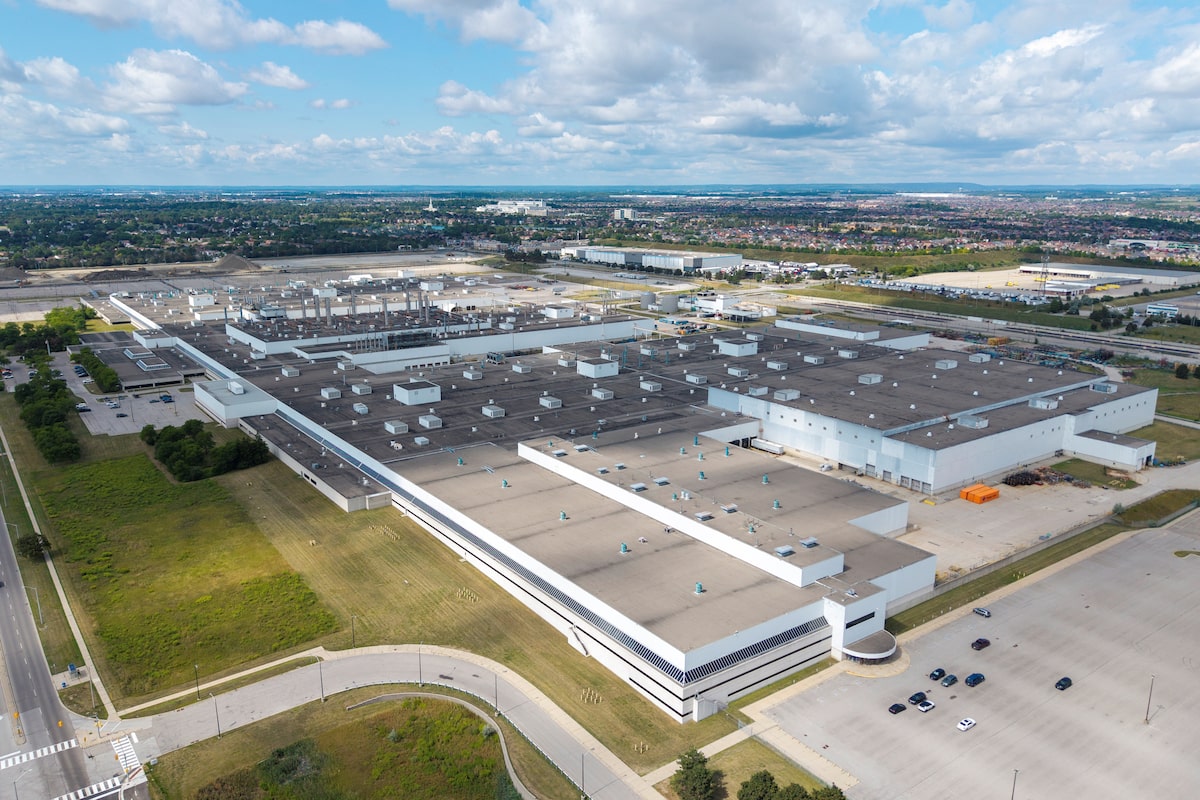
(Photo: aerial file photo of the Stellantis Brampton Assembly Plant.)
💬 Comments
No comments yet. Be the first!