 N環球

Supreme Court of Canada Largely Upholds Quebec's Bill 21, Strikes Narrow Provision on MNAs
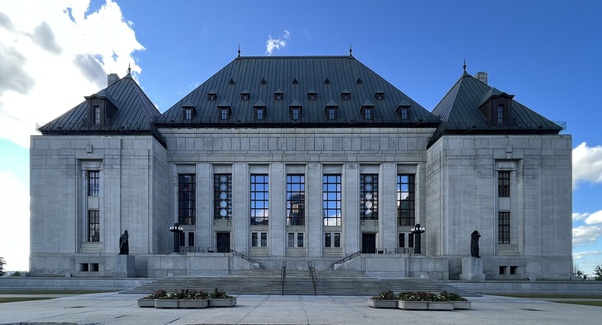
Canada's Supreme Court ruled Friday that Quebec's secularism law, Bill 21, is largely valid and that Quebec validly invoked the Charter's section 33 notwithstanding clause; the only unconstitutional element is section 8's face-covering rule as it applies to members of the National Assembly. The ruling sets a precedent for every province's use of the override.
The Supreme Court of Canada ruled at 9:45 a.m. on Friday (November 27) that Quebec's Act respecting the laicity of the State, commonly known as Bill 21, is largely constitutional. The Court confirmed that Quebec validly invoked the override clauses in section 33 of the Canadian Charter of Rights and Freedoms and section 52 of Quebec's Charter of human rights and freedoms. The only unconstitutional element is section 8's face-covering rule, to the extent that it applies to members of the National Assembly of Quebec, which infringes the democratic rights guaranteed by section 3 of the Charter. The case is cited as 2026 SCC 41.
The override is subject to no limits beyond its text
Relying on its 1988 decision in Ford v. Quebec, the Court held that the exercise of the override power is not subject to any limit other than those expressly set out in the provision's text. Chief Justice Richard Wagner and Justices Karakatsanis, Côté, Rowe, Kasirer and O'Bonsawin supported that conclusion. The Court also confirmed that a court retains the power to rule on a law's consistency with Charter rights and to make a declaration of inconsistency despite the invocation of the override — but it made no such declaration in this case.
The one unconstitutional point: the MNA face-covering rule
All seven judges held that section 8 of Bill 21 infringes the democratic rights in section 3 of the Charter to the extent that it applies to members of the National Assembly. Section 3 protects the right of citizens to vote and to seek election to a legislative body; section 8, which requires faces to be uncovered when giving or receiving government services, prevents elected members whose religious beliefs require them to wear a face covering from taking their seats and participating in the legislative process. The rest of section 8 is unaffected.
Sections 28 and 23 do not defeat the law
The Court held that section 28 of the Charter, which states that Charter rights apply equally to men and women, guides how other rights are understood but does not create a distinct right that could alone invalidate Bill 21. It also ruled that the law does not infringe the education rights of Quebec's English-speaking minority under section 23: although the law could limit English school boards' ability to recruit, retain, transfer or promote certain staff, it was not shown to undermine the specific linguistic or cultural interests section 23 protects. The Court further rejected arguments that the law violates pre-Confederation statutes, exceeds the division of legislative powers or offends the constitutional architecture.
Background and controversy
Bill 21 was passed on June 16, 2019, by the Coalition Avenir Québec government of then-premier François Legault. It bars public servants in positions of authority — including teachers, police officers and judges — from wearing religious symbols such as hijabs, kippahs and turbans at work, and requires faces to be uncovered when giving or receiving government services; the ban was later extended to everyone who interacts with children in public daycares, elementary schools and high schools, including volunteers. Critics say the law disproportionately targets racialized religious minorities, particularly Muslim women who wear the hijab, forcing them to choose between public-sector jobs such as teaching and their religious beliefs. The case was brought by the English Montreal School Board and others, and the Supreme Court heard it over four days in March — one of the longest hearings in its history.
National impact: a precedent for the override
The ruling reaches beyond Quebec. Ontario, Saskatchewan and Alberta have also invoked section 33 in recent years to shield controversial legislation, including laws restricting the rights of transgender people and Quebec's language-law reforms; later cases such as Saskatchewan's 2023 pronoun law will be affected by this judgment. The federal government had urged the Court to impose new limits on the override, while five conservative premiers publicly opposed Ottawa's intervention; the Court ultimately maintained the permissive reading from 1988.
Reactions and what comes next
Quebec's new premier, Parti Québécois Leader Paul St-Pierre Plamondon, said before the ruling that he opposed any Supreme Court decision invalidating elements of Bill 21, and has pledged to extend the religious-symbols ban to schoolchildren. The Canadian Civil Liberties Association has called the law an “egregious rights violation” that disproportionately targets Muslim women. Prime Minister Mark Carney faces pressure to maintain national unity. Formal reactions from the parties were still emerging after the ruling, and this story will be updated. The Court dismissed the appeals and Quebec's cross-appeal; the decision is final.
The photo shows the Supreme Court of Canada building, a file image. (Image: Quora)
💬 Comments
No comments yet. Be the first!