 N環球
N環球 
Survivors' Flag raised on Parliament Hill to honour residential school Survivors and the children who never came home
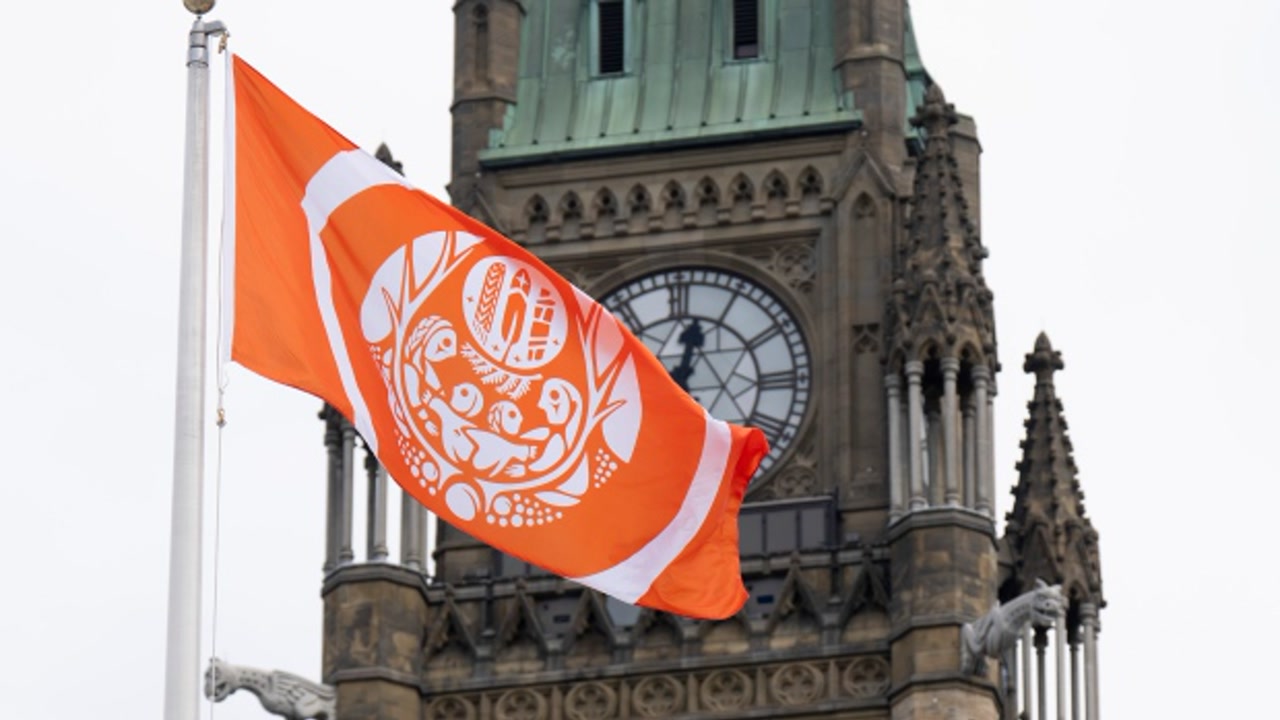
On the National Day for Truth and Reconciliation, First Nations, Inuit and Métis residential school Survivors raised the Survivors' Flag on Parliament Hill; Governor General Louise Arbour and Minister Rebecca Alty attended.
Why it matters
September 30 is the National Day for Truth and Reconciliation. Residential school Survivors from First Nations, Inuit and Métis communities raised the Survivors' Flag on Parliament Hill to honour the children who never returned home and to recognize the strength, courage and resilience of Survivors. Governor General Louise Arbour and Crown-Indigenous Relations Minister Rebecca Alty attended. The flag was created for and by Survivors and was first raised on Parliament Hill in August 2022.
Full report
OTTAWA, Sept. 30 — On the National Day for Truth and Reconciliation, residential school Survivors, Elders and representatives of the National Centre for Truth and Reconciliation (NCTR) gathered on Parliament Hill, on the traditional territory of the Anishinaabeg Algonquin People, to raise the Survivors' Flag in honour of Survivors and in memory of the children who never returned home.
They were joined by leaders of national Indigenous organizations, Her Excellency the Right Honourable Louise Arbour, Governor General of Canada, and the Honourable Rebecca Alty, Minister of Crown-Indigenous Relations.
The Survivors' Flag was created for—and by—Survivors to honour all Survivors, families and communities affected by the Residential School system. Its design was developed through consultation with Inuit, Mi'kmaq, Atikamekw, Cree, Ojibway, Dakota, Mohawk, Dene, Nuu-chah-nulth, Secwepemc and Métis Nation Survivors.
Several Survivors spoke at the ceremony. Elder Claudette Commanda of the Algonquin Anishinabeg Nation said the flag stands as a testament that "reconciliation requires action." Antoine Mountain, a First Nations Survivor who spent 12 years in residential schools, said the flag is "more than a symbol" — it is a recognition of Survivors' experiences. Inuit Survivor Bernard Andreason said the raising was a powerful reminder "that our stories matter." Ann Lafleur, a Métis Survivor of the Île-à-la-Crosse Boarding School, said it is time to "reclaim our future."
Stephanie Scott, Executive Director of the NCTR, said the Residential School system spanned generations and its impacts continue to be felt; the road to reconciliation is long and calls for humility, perseverance and meaningful action. Minister Alty said raising the flag is an opportunity to honour Survivors, remember the children who never came home, and reflect on the truths shared about Residential Schools, adding that the government will continue listening to Survivors and advancing Indigenous rights and self-determination.
Support lines: National Residential School Crisis Line 1-866-925-4419 (24 hours); Hope for Wellness Help Line 1-855-242-3310.
💬 Comments
No comments yet. Be the first!