 N環球

Huawei Teases Custom HBM Design With 4,096 Data Pins, Twice the Density of Samsung and SK Hynix
Bloomberg reports Huawei will present a custom high-bandwidth memory design at the ISSCC chip conference in February 2027, with 4,096 data pins across 64 channels and five-layer wafer-on-wafer hybrid bonding. Capacity, speed and a production timeline were not disclosed, and the design remains a paper, not a product.
Huawei is developing a custom high-bandwidth memory (HBM) design with twice the data-pin density of memory currently mass-produced by Samsung Electronics and SK Hynix, Bloomberg reported on November 26. The design will be presented at the IEEE International Solid-State Circuits Conference (ISSCC) in San Francisco, February 14-18, 2027, in a paper titled "A 64-Channel 4096-DQ Custom HBM with Memory Controllers and 5-Layer Wafer-on-Wafer Hybrid Bonding."
According to the conference program, the custom HBM has 4,096 data pins spread across 64 channels, integrates the memory controller directly into the memory stack, and uses five-layer wafer-on-wafer hybrid bonding, which joins wafers face-to-face with copper-to-copper bonds instead of solder bumps to raise interconnect density and cut power consumption and signal loss. The paper lists seven Huawei researchers based in Shenzhen and is scheduled for 4:00 p.m. on Tuesday, February 16.
A paper, not a product
Bloomberg cautioned that only the paper title is public so far. Capacity, per-pin speed, bandwidth and a production timeline were not disclosed, and Huawei has not demonstrated that the design is ready for commercial production. For comparison, the JEDEC HBM4 standard defines a 2,048-bit interface with 32 channels, up to 8 Gb/s per pin and up to 2 TB/s per stack. Doubling the pin count should in theory deliver much higher bandwidth, but measured performance will have to wait for the February presentation.
The design comes against the backdrop of U.S. export controls that bar Samsung, SK Hynix and Micron from selling advanced HBM to Chinese customers. The Information reported earlier this month that Huawei has told some customers its next Ascend 960DT AI accelerator will still rely largely on Samsung and SK Hynix memory, even asking buyers to source the HBM themselves. SK Hynix said it has not supplied Huawei since 2020.
South Korean rivals are on the same track
Samsung and SK Hynix are pursuing custom HBM of their own. Seoul National University professor Choi Jae-hyuk noted that both South Korean makers are developing commercial custom HBM with hybrid bonding together with major U.S. technology companies. In the same ISSCC session, Samsung is scheduled to present a 48 GB HBM4E running at 17 Gb/s per pin, while SK Hynix will present a next-generation DRAM architecture using vertical gates.
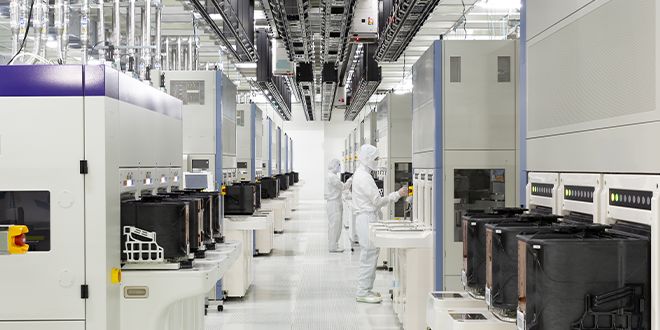
(File photo: a semiconductor cleanroom.)
💬 Comments
No comments yet. Be the first!