 N環球

China speeds up full-lifecycle AI law, naming DeepSeek, Alibaba and Moonshot in scope
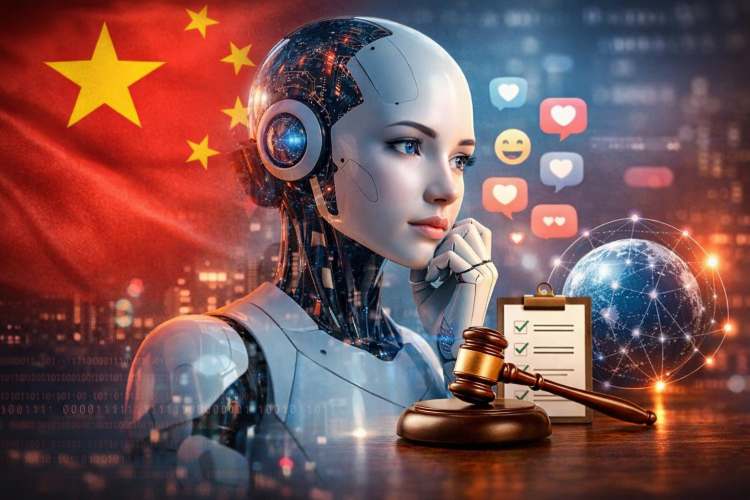
China's National Development and Reform Commission said on November 3 it will accelerate comprehensive AI legislation and safety standards covering the full lifecycle of AI, naming DeepSeek, Moonshot and Alibaba among the frontier developers in scope, with safety-risk disclosure, incident reporting, regulatory sandboxes and transition periods.
China is moving to legislate artificial intelligence across its entire lifecycle, from data and computing power to applications. Wang Ruomeng, a senior official at the National Development and Reform Commission (NDRC), said on November 3 that China will accelerate comprehensive AI legislation and set safety standards, Bloomberg reported. Domestic frontier developers including DeepSeek, Moonshot and Alibaba are in the frame. (Stock image: an illustration of AI regulation.)
What it covers: data, computing, algorithms, applications
Under the plan described by the NDRC, the rules would span AI development and application end to end: data, computing power and algorithms through to specific applications, from research and development to deployment. Wang, deputy director of the NDRC's Department of Innovation and High-Tech Development, spoke at a briefing on November 3, and said implementation would be reviewed regularly and provisions updated as technology advances.
What developers must disclose
Developers and operators would be required to disclose safety risks and proactively report incidents and vulnerabilities. At the same time, the regime leaves room for experimentation: industry regulatory sandboxes would let companies test new technologies in controlled environments, with a reasonable transition period for compliance. The specific scope and obligations for each company are to be set in later decrees and detailed criteria.
Effects on people are also in scope
Beyond model and technical safety, the framework would address AI's effects on people: monitoring the risk of AI displacing jobs, strengthening social protections, and addressing user over-reliance and emotional dependence. Deepfakes, algorithmic discrimination and privacy leaks are also within the stated governance scope. China introduced rules for public-facing generative AI services in 2023, and comprehensive AI legislation was added to the State Council's work plan in May.
Context: after the China-US AI agreement
The announcement follows a China-US AI agreement reached in September and AI discussions at the recent Trump-Xi summit in Washington. Separately, draft rules reported in October would limit exports of 23 types of advanced AI technology, including chatbot models, AI agents and large computing systems; that remains a reported measure pending an official text.
💬 Comments
No comments yet. Be the first!