 N環球

Delhi smog worsens as PM2.5 tops 461 in parts of city ahead of Diwali
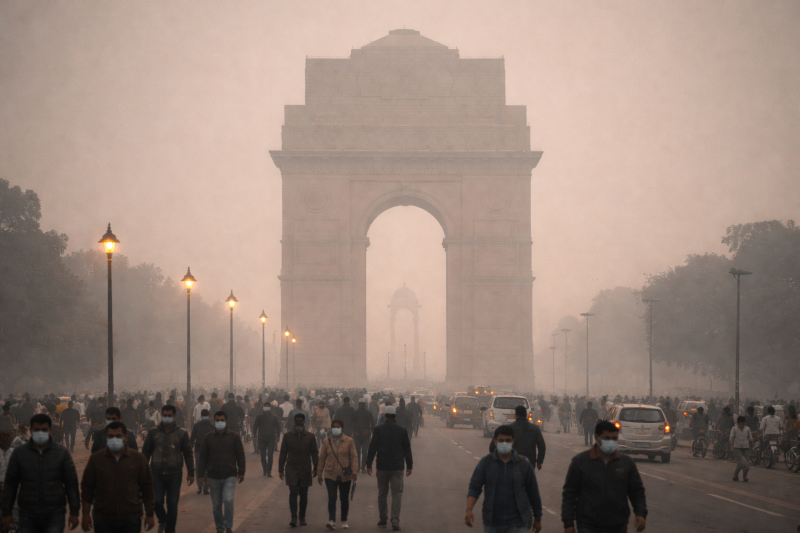
AFP reported on 4 November that PM2.5 levels exceeded 461 micrograms per cubic metre in parts of New Delhi, more than 30 times the WHO daily guideline, with the citywide air quality index in the 'very poor' range days before Diwali.
Toxic air pollution in India's capital, New Delhi, surged on Wednesday, 4 November. According to AFP, monitoring firm IQAir recorded PM2.5 concentrations above 461 micrograms per cubic metre in parts of the city, more than 30 times the World Health Organization's 24-hour guideline of 15 micrograms per cubic metre. The citywide air quality index stood at around 377 to 379 in the morning, in the 301-to-400 band India's pollution watchdog calls “very poor”; readings above 400 are classed as “severe”.
Curbs tightened three days ago, yet the smog thickened
The deterioration came three days after authorities tightened measures: from 1 November, Delhi's winter controls restrict vehicles and building work, trigger Stage II of the Graded Response Action Plan (GRAP), and require Delhi government and private offices to put 50% of staff on work-from-home arrangements through 31 January. Delhi Metro has added extra weekday trips.
According to India's environment ministry, vehicles account for 23% of Delhi's winter pollution, biomass burning including farm stubble fires contributes 20%, and industry including coal-fired power plants about 9%. The largest share, 27%, comes from secondary particles, formed when gases released by vehicles, industry, power plants and biomass burning react in the atmosphere.
Diwali fireworks are the next risk
Diwali falls on Sunday, 8 November, and fireworks are expected to push pollution higher. India's Supreme Court this month allowed limited use of so-called “green” firecrackers in Delhi and neighbouring areas, though reports note such restrictions are routinely flouted.
A 2024 study published in The Lancet Planetary Health estimated that 3.8 million deaths in India between 2009 and 2019 were linked to air pollution. PM2.5 particles are carcinogenic microparticles small enough to enter the bloodstream and damage the lungs and heart.
(Cover image: archive photo of a smog-covered New Delhi street scene.)
💬 Comments
No comments yet. Be the first!