 N環球

Google picks Blue Origin's New Glenn to launch its space-based AI satellites in 2029
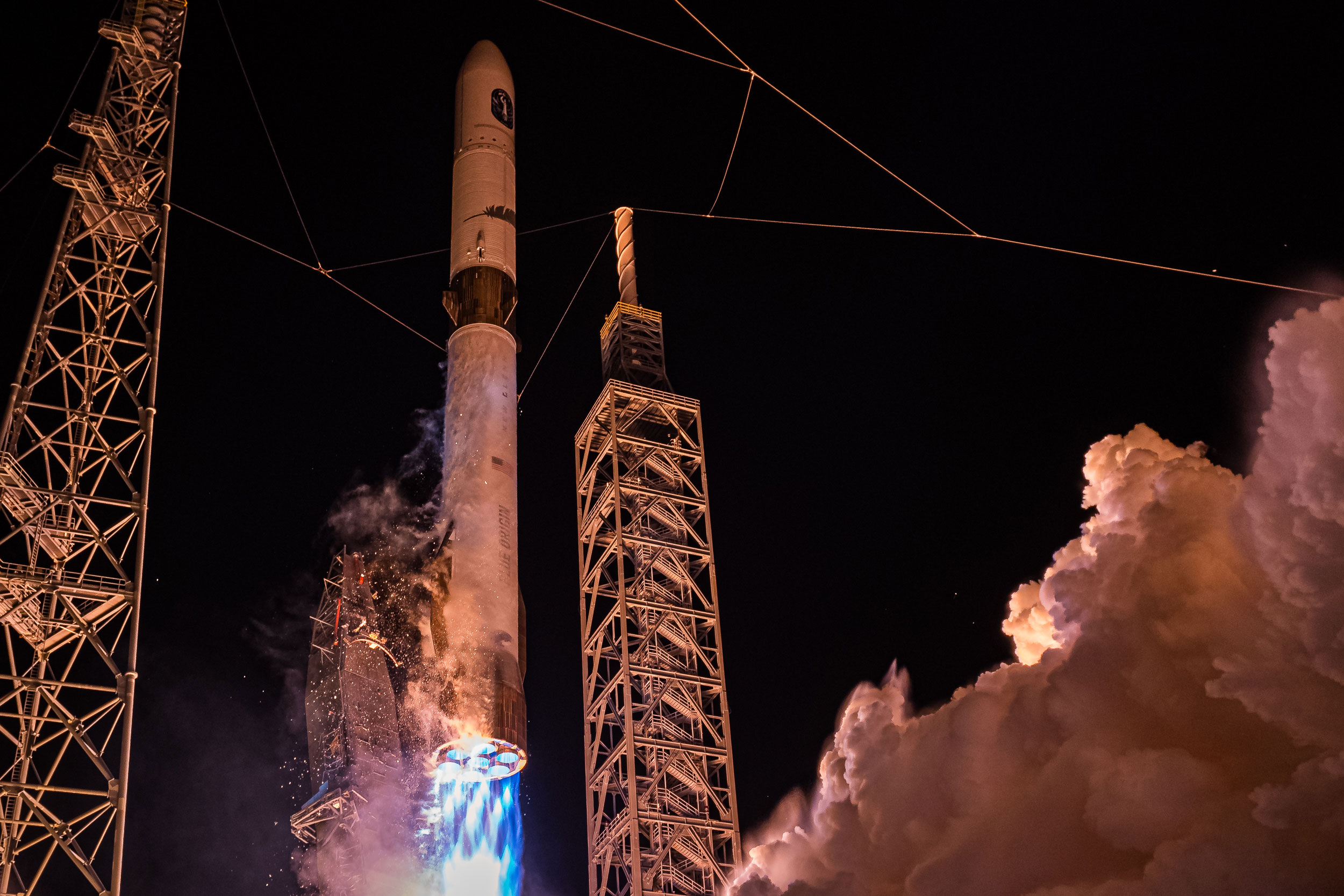
Blue Origin and Google announced on November 19 a launch services agreement under which Blue Origin's heavy-lift New Glenn rocket will carry several Project Suncatcher satellites equipped with Google's TPU chips into sun-synchronous orbit in the first quarter of 2029, testing whether solar power in space can run AI computing.
Blue Origin and Google announced on Thursday (November 19) a launch services agreement under which Blue Origin's heavy-lift New Glenn rocket will carry several Project Suncatcher satellites equipped with Google's own TPU chips into sun-synchronous orbit in the first quarter of 2029, testing whether AI computing can be powered by solar energy in space.
First dedicated heavy-lift mission
The flight will be Google's first dedicated heavy-lift launch for Project Suncatcher. According to Blue Origin's announcement, the mission will place multiple computing satellites into sun-synchronous orbit, each with computing capacity roughly equivalent to a data centre rack, linked by free-space optical connections into a distributed AI system. Google's idea is to tap the abundant, uninterrupted solar power in orbit to run AI workloads, easing the strain on power grids and cooling systems on Earth.
From prototype to constellation
Suncatcher is still a research programme. A refrigerator-sized prototype satellite built with Planet Labs launched aboard a SpaceX rocket on October 1 and has run a TPU in orbit; a two-satellite experiment planned for 2027 will test optical links between satellites. The 2029 New Glenn mission is the next step in scale, but Google has not said it will deploy an operational orbital data centre by then. The companies have not disclosed the contract value or the exact number of satellites on the first flight.
What it means for Blue Origin
For Blue Origin, the deal is a significant step in expanding its launch business as it works to revive New Glenn after repeated delays and a launchpad explosion in May. The rocket has been grounded since its maiden flight and is expected to return to flight in early 2027. New Glenn can lift 45 metric tons to low Earth orbit inside a seven-metre fairing. Travis Beals, Google's senior director for Project Suncatcher, called the programme "a long-term moonshot to scale AI infrastructure in space by tapping into the abundant solar power in orbit" and the dedicated Blue Origin launch "a crucial milestone" on its roadmap.
Space-based computing still faces open questions, including whether server hardware can withstand space radiation, how it can be cooled in a vacuum, and whether fast-moving satellites can reliably exchange enough data to act as one distributed AI system. The 2029 launch will be the first large-scale test of those questions.
💬 Comments
No comments yet. Be the first!