 N環球

Kakao Open-Sources Two Kanana-2 Vision Encoders, Claims Wins Over Google, Meta, Apple Models
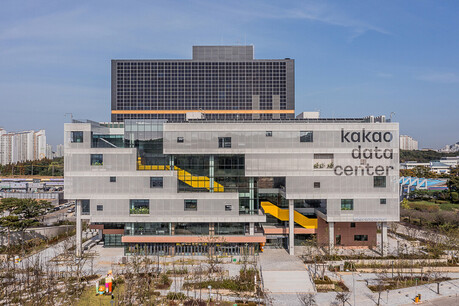
Kakao has released two in-house vision encoders, Kanana-2-vision-encoder, on Hugging Face under the commercially usable Kanana Open License; the company says they beat models from Google, Meta, Apple and Alibaba across 42 benchmarks.
Why it matters
A vision encoder is the "eyes" of an AI: it extracts visual features — objects, text, locations, shapes — from images and passes them to a language model that answers user queries, from reading menu items and prices to understanding document layouts and describing photos. Kakao releasing two of them at once, under a license that permits commercial use, gives multimodal AI developers a ready-made new option.
What was released
Kakao announced on Wednesday, Oct 21, that it has released two in-house developed vision encoders, "Kanana-2-vision-encoder," on Hugging Face: a medium version with 426 million parameters and a tiny version with 98 million parameters, as previewed at its developer conference "If Kakao 26." Both models are released under the "Kanana Open License," which permits use not only for research and development but also for commercial purposes.
Full report
According to Kakao, the two models outperformed major global vision encoders — Google's SigLIP 2, Meta's Perception Encoder, Apple's AIMv2 and Alibaba's Qwen3.5-ViT — across nine domains and 42 benchmarks, including general visual question answering, English and Korean OCR and document understanding, visual grounding and fine-grained perception. Notably, the tiny model, with fewer than 100 million parameters, beat some competing models with over 400 million parameters on certain benchmarks — all per Kakao's own published evaluations, with independent third-party verification still to come.
The Elec reports that Kakao used its in-house Kanana-2 language model during training, improving training efficiency about fourfold over the previous approach, and that improvements to its high-resolution image processing architecture cut processing latency by more than 60% compared with major competing models. Kakao says the performance gap was particularly significant in Korean text recognition, document understanding and object localization. The model card is live on Hugging Face (kakaocorp/kanana-2-vision-encoder-tiny) for developers to download and try.
💬 Comments
No comments yet. Be the first!