 N環球

South Korea's Lee pitches record budget with AI and chip spending nearly doubled to 21.3 trillion won
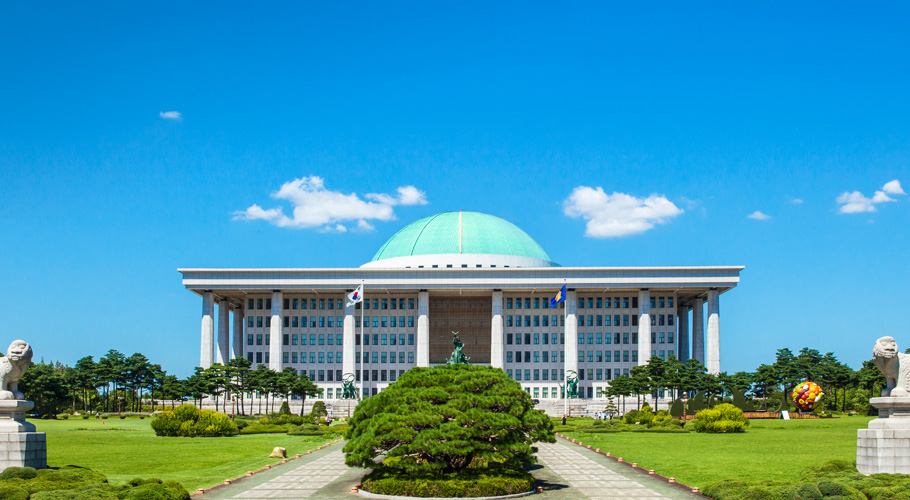
President Lee Jae Myung urged the National Assembly on November 2 to pass a record 820.9 trillion won budget for 2027, with 21.3 trillion won for AI and the three semiconductor, physical AI and data-centre megaprojects, plus a roughly 162.3 trillion won Future Response Fund; parliament faces a December 2 deadline.
South Korean President Lee Jae Myung delivered his annual budget address to the National Assembly on November 2, urging lawmakers to pass a record 820.9 trillion won (about $615 billion) budget for 2027, up 12.8 percent from this year. The headline item is artificial intelligence and semiconductors: 21.3 trillion won (about $16 billion) for semiconductors, physical AI and AI data centres, the government's "three megaprojects" — nearly double this year's amount.
How the three megaprojects break down
"We will invest boldly in AI and future growth engines to raise the growth potential that forms the fundamental strength of our economy," Lee told parliament. Of the 21.3 trillion won, 2 trillion won goes to semiconductor production infrastructure and 500 billion won to demonstrations of physical AI technologies. A further 4.7 trillion won will fund the development of South Korea's own frontier AI models, with the stated goal of world-leading performance.
The budget also sets aside 13.8 trillion won for 10 strategic technology sectors, and raises research and development spending by 4 trillion won to 39.5 trillion won. A Future Response Fund of about 162.3 trillion won, financed largely by extra tax revenue from the semiconductor boom, is meant to support young people, regional development, growth industries and education, and to cushion future revenue swings.
Turning a chip boom into national investment
The proposal rides on a semiconductor export surge. Trade data released on November 1 showed October exports up 93.7 percent year on year to $115.28 billion, with semiconductor exports up 259.4 percent to $56.44 billion — about 49 percent of total exports and the second-highest monthly figure on record.
Public money is paired with private commitments: a chip buildout of roughly 800 trillion won led by Samsung Electronics and SK Hynix. Lee has previously pledged to double chip production within five years.
What happens next
The bill was submitted to the National Assembly in September and faces a December 2 passage deadline set by law. With the ruling Democratic Party holding a parliamentary majority, passage is widely expected, though the size and use of the Future Response Fund have already become a point of political contention. All figures cited here are from the proposal; final allocations depend on the version parliament approves.
💬 Comments
No comments yet. Be the first!