 N環球

Five New CNG Stations Open in Lagos, Able to Fuel About 8,400 Vehicles a Day at Full Capacity
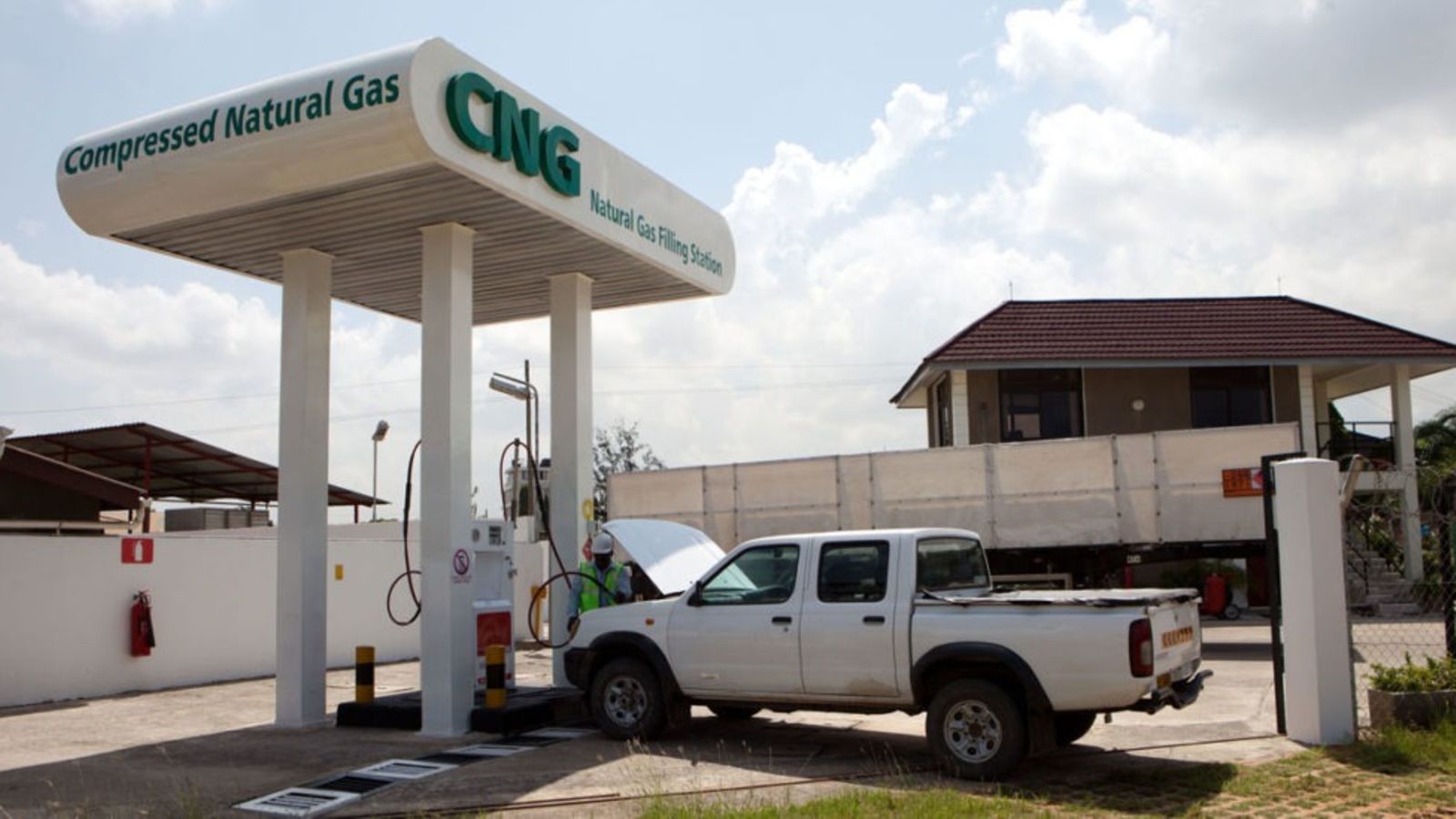
The federal government has commissioned five new compressed natural gas refuelling stations in Lagos, able to fuel about 8,400 vehicles a day at full capacity; the state energy company's Lagos network grows to nine stations, with six more due in the first quarter of 2027.
Nigeria's federal government on Wednesday commissioned five new compressed natural gas (CNG) refuelling stations in Lagos, which together will be able to fuel about 8,400 vehicles a day at full capacity, giving motorists and commercial transport operators access to cheaper, cleaner fuel. Ekperikpe Ekpo, Minister of State for Petroleum Resources (Gas), performed the commissioning. (Photo: a CNG refuelling station, file photo.)
Five stations across four districts, 120,000 cubic metres a day
The five new stations are located at Abule Egba, Ajah, Oko-Oba, Idimu and Ogolonto, and were built through a joint venture between the Midstream and Downstream Gas Infrastructure Fund (MDGIF) and Ibile Oil and Gas Corporation, owned by the Lagos State Government. Each station can compress 24,000 standard cubic metres of gas a day and store 9,800 standard cubic metres; together the five hold 45,640 standard cubic metres and offer combined daily compression capacity of 120,000 standard cubic metres.
Network grows to nine stations; six more due in early 2027
Temitayo Gbajumo, managing director of Ibile Oil and Gas Corporation, said the company has a mandate to build 15 CNG stations across Lagos. Four had been delivered earlier, and the five new outlets bring the total to nine, with the remaining six at various stages of completion and expected to be commissioned by the first quarter of 2027.
National target of 1,000 stations; success hinges on supply and safety
The commissioning follows President Bola Tinubu's directive to add 500 CNG refuelling stations towards a planned national network of 1,000. Ekpo said success should be measured by the effect on transport costs, business operations and household spending rather than by the number of stations opened. Oluwole Adama, executive director of the MDGIF, warned that reliable gas supply, proper maintenance and strict safety standards would determine the programme's long-term success.
💬 Comments
No comments yet. Be the first!