 N環球

London car use forecast to rise 10% over the next decade, draft plan shows
The draft 2026-36 London Plan from the mayor's office and Transport for London projects car trips rising 10% on 2023 levels, with walking and cycling falling as a share of trips, bus speeds possibly down 7% and Tube stations facing regular closures; City Hall stresses it is modelling assuming no new policies, not a prediction.
Car use in London will rise by 10% over the next decade, with cycling and walking falling as a proportion of trips, according to the draft of the latest 10-year London plan drawn up by the mayor's office and Transport for London (TfL), putting into doubt Mayor Sadiq Khan's promises on air quality and the environment.
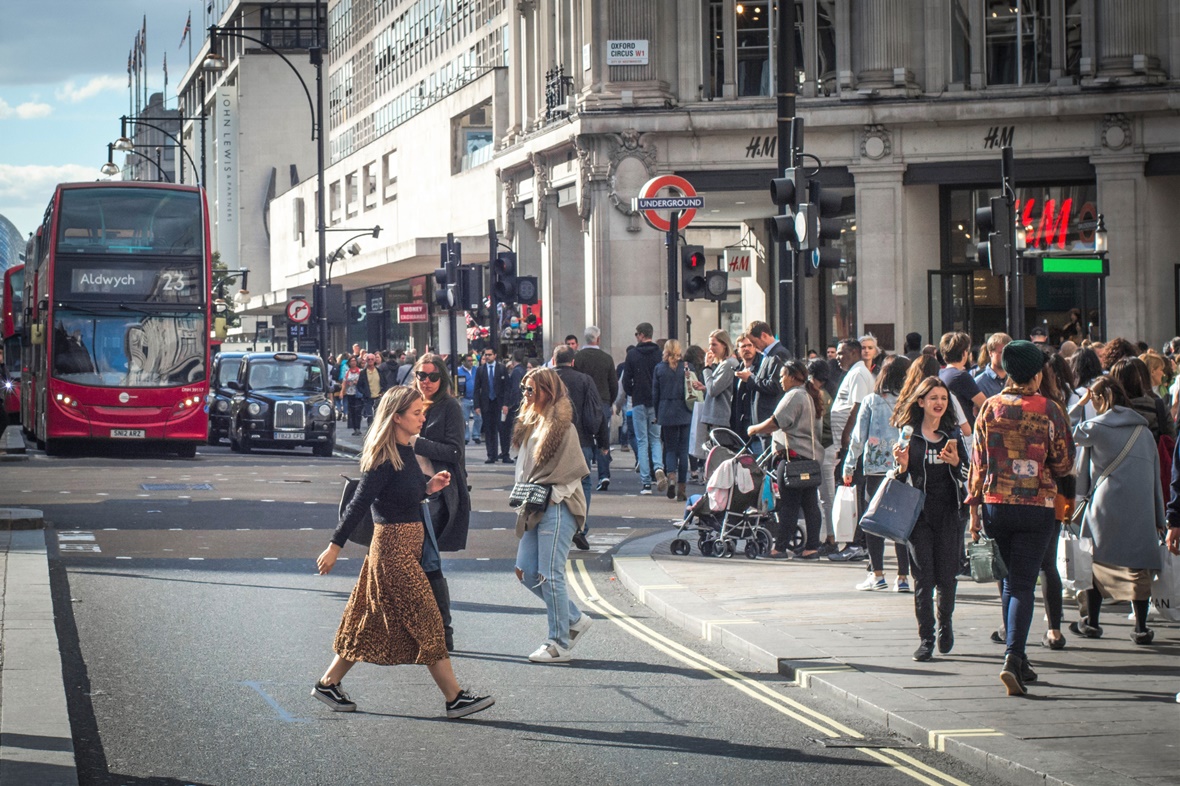
Above: file photo of Oxford Street, London.
Population nearing 10 million drives the rise
The draft plan for 2026-36 sets out three scenarios for growth in population and jobs, and thus demand for transport, housing and other services. The central one, seen as the most likely, forecasts a population of 9.9 million, up from the current 9.1 million. If this happens, the number of car or other motor vehicle trips would rise by 10% between a baseline date of 2023 and 2036, with trips using public transport going up by 17%. Journeys by active travel, such as walking and cycling, would rise by 6%, resulting in a slight fall as a proportion of all trips taken. The report warned that congestion could cut average speeds by 7%, slowing down bus routes, while severe overcrowding at some Tube stations "indicates the possible regular need for intervention during periods of peak demand, such as closing stations to entering passengers or non-stopping trains".
Pledge questioned; City Hall says it is only modelling
The modelling calls into question Khan's progress on greening London's transport network, given his pledge in 2022 for a 27% reduction in car use across London by 2030. The mayor's office said the figures were not a prediction but modelling, based on an assumption of no new transport policies, and did not take into account the impact of recent changes such as the pedestrianisation of Oxford Street. A spokesperson said: "City hall expects active travel will increase significantly by 2036 and car use will fall. The modelling in the London plan is based on a scenario in which no additional active travel schemes will be introduced over the next decade — which clearly is not the case, and the modelling will help identify what future transport schemes may be needed."
Campaigners say the plan is already out of date
Ralph Smyth, a strategy adviser for the Transport Action Network campaign group, who uncovered the projections in the plan, said progress on shifting the capital away from car use appeared to have stalled. "The new London Plan was the opportunity for the mayor to leave a legacy of a cleaner, healthier and less congested city. Inexplicably, he seems to want to turn back the clock and increase cars across the capital," he said. Jenny Bates, a campaigner from Friends of the Earth, said the transition to electric vehicles will help, "but this will take many years — and it won't reduce congestion". Simon Munk, head of campaigns for the London Cycling Campaign, said the plan risked "modelling a future that is already out of date". Khan has made progress in cleaning up London's air, particularly with the expansion of the ultra-low emission zone to central and inner London in 2023, but the capital still lags behind some other European cities — Paris, by contrast, has seen bike use almost triple as a proportion of all trips in just five years.
Sources: The Guardian, Mayor of London's office, Transport for London.
💬 Comments
No comments yet. Be the first!