 N環球

Montreal tables 2027 budget with 9.8% average residential tax hike; mayor admits breaking inflation pledge
Montreal city council tabled the 2027 budget on November 24, raising residential property taxes by an average of 9.8% — the largest increase in at least 25 years — while Mayor Soraya Martinez Ferrada admitted breaking her campaign pledge to keep increases at the rate of inflation and said she takes full responsibility; homeowners and tenants protested outside city hall.
Montreal city council formally tabled the 2027 budget on Tuesday (November 24): residential property taxes will rise by an average of 9.8%, and commercial property taxes by an average of 6.2%. Mayor Soraya Martinez Ferrada told a news conference that the decision breaks her campaign pledge to keep tax increases at the rate of inflation, and said she takes full responsibility.
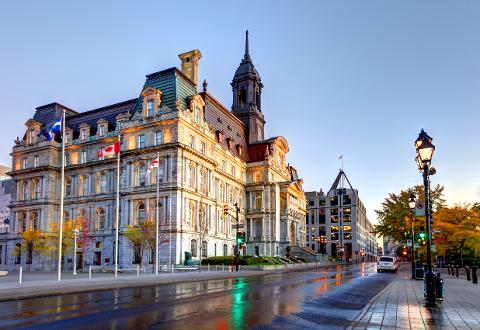
Photo caption: File photo: Montreal City Hall.
Largest increase in at least 25 years; new infrastructure tax adds 5.1 points
According to La Presse and The Canadian Press, it is the largest property tax increase in at least 25 years — some reports put it as the highest since 2010. The 9.8% is made up of a new infrastructure maintenance tax (+5.1 points), the general property tax (+2.6 points), the water tax (+1.5 points) and borough taxes (+0.9 points), partly offset by the debt tax (−0.3 points). The operating budget reaches $8.0 billion. For an average single-family home valued at $781,691, the tax bill rises from $4,937 to $5,449 (up $512, or 10.4%); for an average condo valued at $520,339, it rises from $3,314 to $3,627 (up $313, or 9.5%). By comparison, increases were 3.8% in 2026 and 2.2% in 2025.
Mayor: “extremely difficult” decision; “the quota has been reached”
“We had to take responsible and draconian measures to ensure the long-term viability of municipal services, protect our infrastructure, and put Montreal's finances back on a solid footing,” Martinez Ferrada said at a news conference at city hall. She said she understood the increase would frustrate Montrealers, called it “unprecedented,” and added: “I take full responsibility for this difficult decision.” She also said there would be no further increases of this size — “the quota has been reached.” The city says the new infrastructure tax will put $139 million a year from 2027 into a reserve for maintaining and renewing infrastructure, plus $70.6 million more for the local water reserve; executive committee chair Claude Pinard said Montreal has “hit a wall” and “the cost of inaction has accumulated.”
Increases vary by borough; protest outside city hall
The increases vary widely by borough: Rosemont–La Petite-Patrie tops the list at about 14%, followed by Verdun and Outremont at around 12% and Le Plateau-Mont-Royal at 11.5%. At 11:30 a.m. on Tuesday, homeowners and tenants gathered outside city hall to protest an increase not seen in more than two decades, warning it would worsen the affordability crisis, drive up rents and risk more homelessness. Peter Sergakis, head of the bar owners' union, demanded the city be placed under trusteeship and called for the mayor to resign. Official Opposition leader Ericka Alneus said the mayor had broken her promise: “She promised that she would respect the inflation rate, which is not the case. At 9.8, we're talking about three times more than what was promised.” The Canadian Federation of Independent Business called the budget a “disgrace,” and the Chamber of Commerce of Metropolitan Montreal said it was “disappointed.”
What's next: public review until December 4, vote December 16
After tabling, the council's Commission on Finance and Administration will hold a public review of the budget from November 25 to December 4; city council is scheduled to vote on December 16, and the agglomeration council will adopt its budget on December 17. Tax bills are usually mailed at the end of January, and the figures may still change before the vote.
💬 Comments
No comments yet. Be the first!