 N環球
N環球 
One year of NYC congestion pricing: PM2.5 down 13% in Manhattan, Columbia study finds
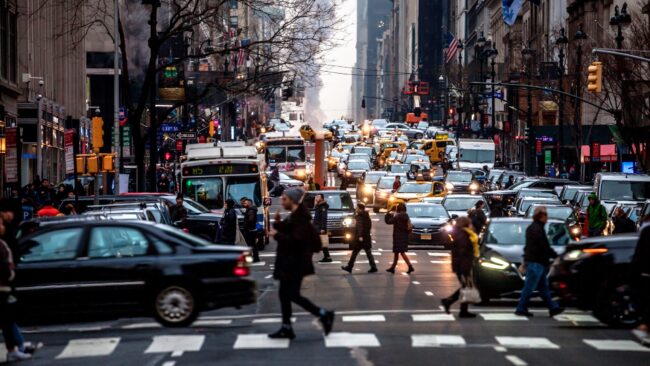
A Columbia Climate School study published Oct. 7 finds New York's first year of congestion pricing left PM2.5 about 13% lower than expected inside Manhattan's tolling zone, tracking an 11% drop in vehicles; a region-wide nitrogen dioxide decline could not be tied to the tolls.
What the study found
Researchers at Columbia's Lamont-Doherty Earth Observatory analyzed ground-level air pollution from 15 sites in New York City's Community Air Survey network, in a study published October 7 in Environmental Science & Technology Letters. Fine particulate pollution (PM2.5) inside the congestion relief zone — Manhattan south of 60th Street — came in about 13 percent (roughly 1.3 to 1.4 micrograms per cubic meter) lower than expected based on trends at sites outside the zone, after controlling for weather and seasonal effects. It is among the first year-long assessments of the Central Business District Tolling Program, the first congestion pricing program in the United States, which took effect January 5, 2025 and charges most vehicles entering lower Manhattan to cut traffic and raise revenue for public transit.
Fewer cars, cleaner air
The estimated drop in pollution broadly tracked the roughly 11 percent decline in vehicles entering the zone, and monitoring data showed fewer pronounced rush-hour pollution spikes in 2025 — evidence the tolls shifted travel behavior during the busiest periods. "For the most part, the program appears to be working," said coauthor Daniel M. Westervelt, an associate research professor at the Columbia Climate School. "It reduced particulate pollution inside the congestion zone by a modest amount."
What the study could not prove
Satellite observations showed nitrogen dioxide fell more than 20 percent across the New York metro area in 2025 versus a 2018–2024 baseline, but the researchers could not attribute that regional decline to congestion pricing — broader regional air-quality policies likely drove it. At two monitoring sites just outside the zone, near the Brooklyn Queens Expressway and in Mott Haven, PM2.5 ticked up about 0.5 micrograms per cubic meter, but the increase was not statistically significant and the team says continued monitoring is needed. The study did not evaluate health benefits, though it notes even small reductions in fine-particle pollution matter for public health.
💬 Comments
No comments yet. Be the first!