 N環球
N環球 
2026 Nobel Prize in Physics goes to 'ghost particle' hunter Francis Halzen
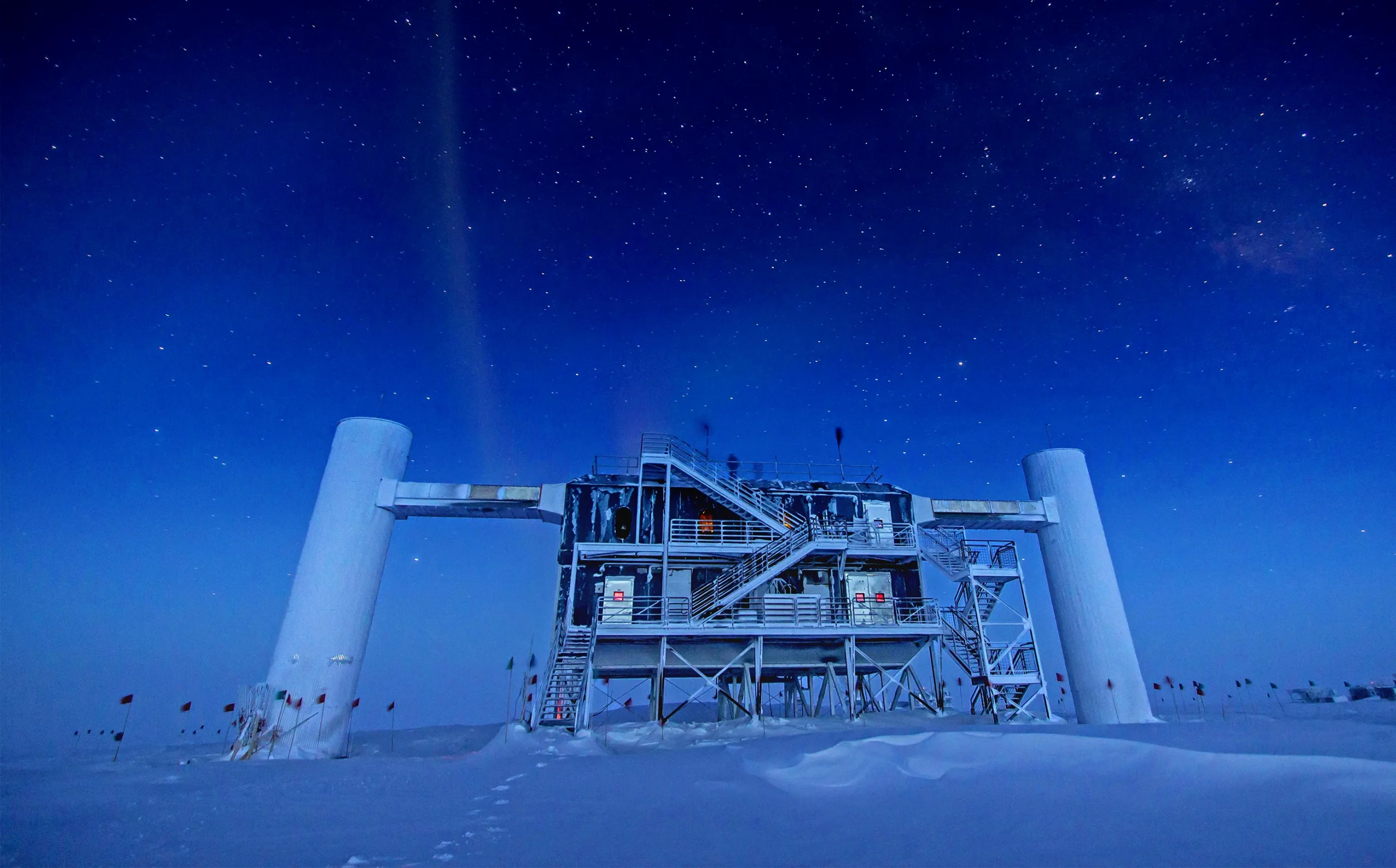
The Royal Swedish Academy of Sciences announced on Oct 6 that 82-year-old Belgian-born scientist Francis Halzen wins the 2026 Nobel Prize in Physics for the IceCube Neutrino Observatory and the discovery of high-energy astrophysical neutrinos.
Why it matters
This is the first Nobel Prize in Physics awarded to a single individual in some years, and it honours a project that turned a cubic kilometre of Antarctic ice into a telescope for the universe's most elusive particles, opening what the committee calls a new kind of astronomy.
Full report
The Royal Swedish Academy of Sciences announced on Oct 6 that the 2026 Nobel Prize in Physics goes to Francis Halzen, "for decisive contributions to the IceCube Neutrino Observatory and the discovery of high-energy neutrinos of astrophysical origin."
Halzen, 82, was born in Belgium and is affiliated with the University of Wisconsin–Madison in the United States. In the 1980s he proposed using the pristine ice at the South Pole as a detector for neutrinos, sometimes called "ghost particles" because they pass through planets and stars almost without a trace. The result was the IceCube Neutrino Observatory, an international collaboration of more than 450 people across 58 institutions in 14 countries, led by Wisconsin–Madison.
Neutrinos are tiny cosmic particles of almost no mass; trillions pass through our bodies every second. Scientists cannot see them directly, so they measure the flashes of light produced when a neutrino collides with an atomic nucleus in the ice. The high-energy neutrinos IceCube captures act as messengers from distant galaxies and exploding stars. "His tenacity and scientific vision has paved the way for a new kind of astronomy," said Mark Pearce, chair of the Nobel Committee for Physics.
The prize carries 12 million Swedish kronor (about US$1.2 million) and will be presented in Stockholm on Dec 10. The Nobel week continues: the chemistry prize is announced Oct 7, literature Oct 8, peace Oct 9 and economic sciences Oct 12. On Oct 5 the medicine prize went to Karl Deisseroth, Peter Hegemann and Georg Nagel for work on optogenetics.
💬 Comments
No comments yet. Be the first!