 N環球

University of Ottawa study: 65 years of Gatineau Park maple leaves show Cold War nuclear “bomb pulse” only just faded
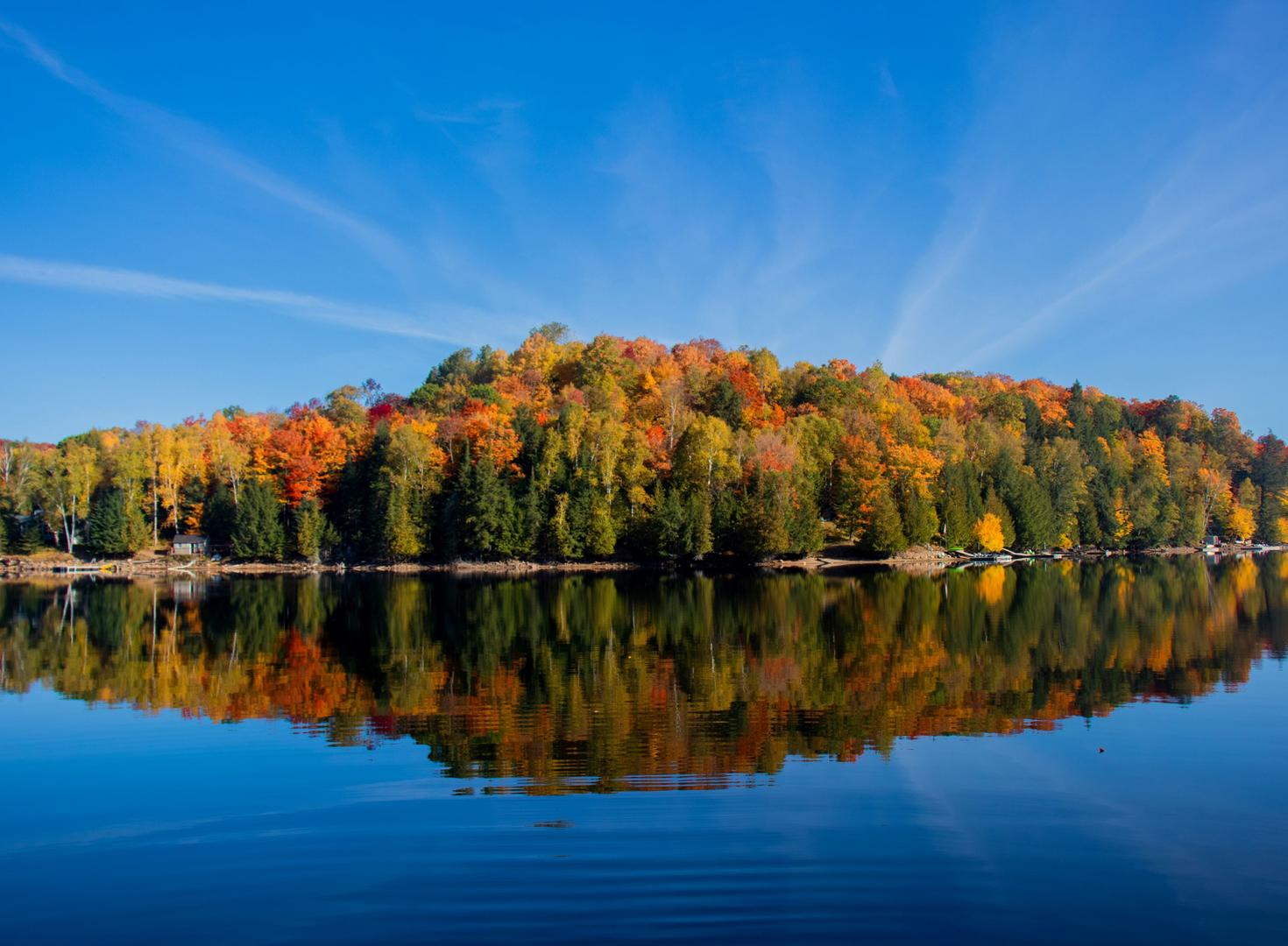
A University of Ottawa-led study of sugar maple leaves collected in Gatineau Park over 65 years finds that the extra radiocarbon released into the atmosphere by Cold War nuclear weapons testing has only recently disappeared from the Ottawa region's biosphere. The leaves' carbon record also lags changes in the atmosphere by about 2.2 years.
A new study led by the University of Ottawa shows that the extra radiocarbon released into the atmosphere by Cold War-era nuclear weapons testing has only recently disappeared completely from the Ottawa region's biosphere. The study analysed 65 years of sugar maple leaves collected in Gatineau Park — the longest continuous record of its kind — and its findings were published on Monday (November 9) in Scientific Reports. (Photo: file photo of Gatineau Park. Photo: University of Ottawa.)
A 65-year “diary of the atmosphere”
The Geological Survey of Canada began collecting sugar maple leaves in Gatineau Park in 1961, taking samples once a month during each growing season to measure their radiocarbon levels. After the agency's radiocarbon laboratory closed in 2004, the André E. Lalonde National Facility for Accelerator Mass Spectrometry (AEL-AMS) at the University of Ottawa took over the analyses and extended the record through 2025, adding 59 annual and seasonal measurements. The collection is ongoing, although leaves gathered in September 2026 are not included in the current study. “These leaves are a 65-year diary of the atmosphere,” said Dr. Leonard Wassenaar, executive director of AEL-AMS. “It took more than 65 years for the extra radiocarbon from weapons testing to disappear from the Ottawa-area biosphere. The effects were still with us decades after the last test.”
The rise and fall of the “bomb pulse”
Above-ground nuclear tests conducted in the late 1950s and early 1960s, mostly by the United States and the Soviet Union but also by the U.K., France and China, released large amounts of radiocarbon into the atmosphere, roughly doubling global levels. Scientists call this sharp increase the “bomb pulse.” In leaves from the Ottawa region, the signal peaked in 1964 at 842 parts per thousand above the reference level; by 2025, it had fallen to –13.9 parts per thousand. The decline happened for two main reasons: the oceans gradually absorbed much of the excess radiocarbon, while emissions from burning coal, oil and natural gas diluted it — fossil fuels are so old that the carbon dioxide they produce contains virtually no radiocarbon. Direct air measurements show atmospheric radiocarbon dropped below its pre-bomb baseline around 2021–2022, but local maple leaves crossed that threshold only in 2024.
New leaves contain traces of older carbon
The study also found a subtle but important offset: plants do not build new growth entirely from carbon absorbed that same year — they can also draw on carbon stored during previous growing seasons. Sugar maple leaves closely follow changes in atmospheric radiocarbon, but lag behind by about 2.2 years, with a margin of uncertainty of 0.3 years; between 1990 and 2019 the leaves also showed a small positive offset averaging 7.4 parts per thousand. “Plants often use older carbon, stored from previous years, to grow new leaves,” Wassenaar added. “We didn't know how much that changed a leaf's radiocarbon signature, or whether leaves tracked the atmosphere consistently. Now we do.”
More accurate reconstructions of the past atmosphere
Scientists often use radiocarbon in leaves and tree rings to reconstruct past atmospheric conditions, usually assuming that a sample reflects the atmosphere in the year it grew. These findings give researchers a more accurate way to interpret such measurements. “Leaves are a reliable way to reconstruct atmospheric radiocarbon from places and periods we never measured directly,” Wassenaar concluded. “Once you factor in the two-year delay, our interpretations should be more precise.” The leaves were collected with permission from the National Capital Commission. The paper, “Stored carbohydrates buffer Bomb and Suess radiocarbon effects in maple leaves across a 65-year Ottawa region record,” by Leonard I. Wassenaar and colleagues, is published in Scientific Reports, DOI: 10.1038/s41598-026-76700-9.
💬 Comments
No comments yet. Be the first!