 N環球

France's nationwide strike hits trains as Paris metro runs normally; Eurostar cancels three services
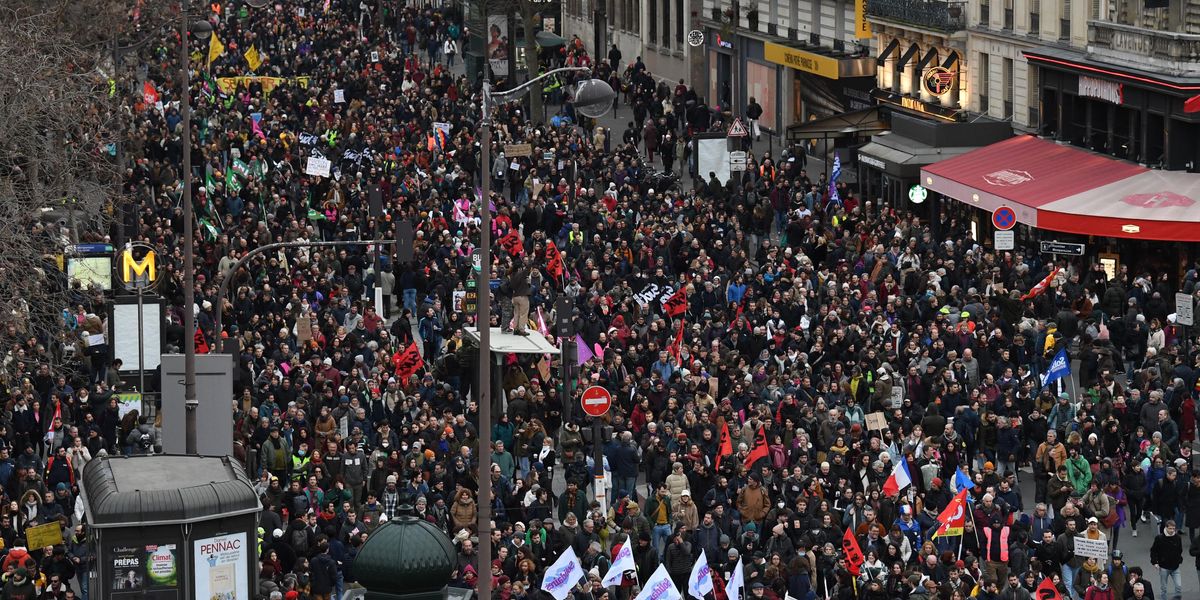
Five French union confederations called a nationwide strike and demonstrations on November 5 over pay, public services and the 2027 budget; the Paris metro, buses and trams are running normally, but Eurostar cancelled three trains, TGV services are slightly disrupted and the RER D is running at about one train in three, with around 70,000 police deployed nationwide.
Five French union confederations launched a nationwide day of strikes and demonstrations on November 5 over pay, public services and the 2027 budget, with all of the rail unions joining. The Paris metro, buses and trams are running normally, but Eurostar cancelled three trains, TGV services on the national operator SNCF are slightly disrupted, and the suburban RER D line is the worst hit, running at about one train in three. Authorities deployed around 70,000 police nationwide to guard against a repeat of the riots of October 17. (Cover photo is a file photo of a street demonstration in Paris.)
Transport: metro normal, trains disrupted, flights largely normal
Eurostar cancelled trains 9004, 9015 and 9052 because of the strike and warned of possible knock-on effects on other French routes; about one TGV in ten was cancelled, while Intercités, regional TER and Île-de-France trains are disrupted and the RER D is running at about one train in three. The Paris metro, buses and trams are running as planned, although individual local stoppages cannot be ruled out. The civil aviation authority said on November 4 it had not asked airlines to cut flights, so Charles de Gaulle and Orly airports are expected to operate normally. France's nuclear output was reduced by 2.4 gigawatts early on Thursday because of the strike.
March: 2 p.m. from Place de la République; parts of central Paris off limits
The Paris march is scheduled from 2:00 p.m. to 7:00 p.m., from Place de la République along Boulevard Voltaire to Place de la Nation; the Paris police prefecture banned the unions' preferred Bastille–Concorde route, and the administrative court rejected the unions' appeal on the evening of November 4. Authorities also banned demonstrations in parts of Paris, Lyon, Lille and Grenoble, including areas near the presidential Élysée Palace, both houses of parliament, the main train stations and downtown areas where looting occurred in October. The domestic intelligence service expects between 500,000 and 700,000 people to join demonstrations outside Paris. The Education Ministry said 17.5% of public primary school teachers were expected to strike; about 80 schools in Paris were already closed.
Background: another test after the October unrest
The mobilisation is the latest test for President Emmanuel Macron's government after weeks of unrest. Demonstrations over living costs, public services and education have grown into the worst civil unrest France has seen in years; rioting and looting on October 17 damaged shops and public buildings, and Justice Minister Gérald Darmanin said at least 2,700 people had been taken into custody. Macron blamed the weekend riots on what he called "seditious" acts by far-left groups and said all "illegitimate" protests would be banned in the coming days. The Yellow Vests movement plans another demonstration on Saturday, when the Louvre, Orsay and Picasso museums in Paris will be closed; Paris metro line 6 will be closed on Sunday.
(Sources: BusinessWorld (Reuters), November 5, 2026; Travel Tourister, November 5, 2026; Al Jazeera; Sortiraparis. Cover photo is a file photo of a street demonstration in Paris.)
💬 Comments
No comments yet. Be the first!