 N環球

São Paulo's Electric Bus Fleet Passes 2,000, About 15% of the City Fleet, Still Short of Its 2024 Target
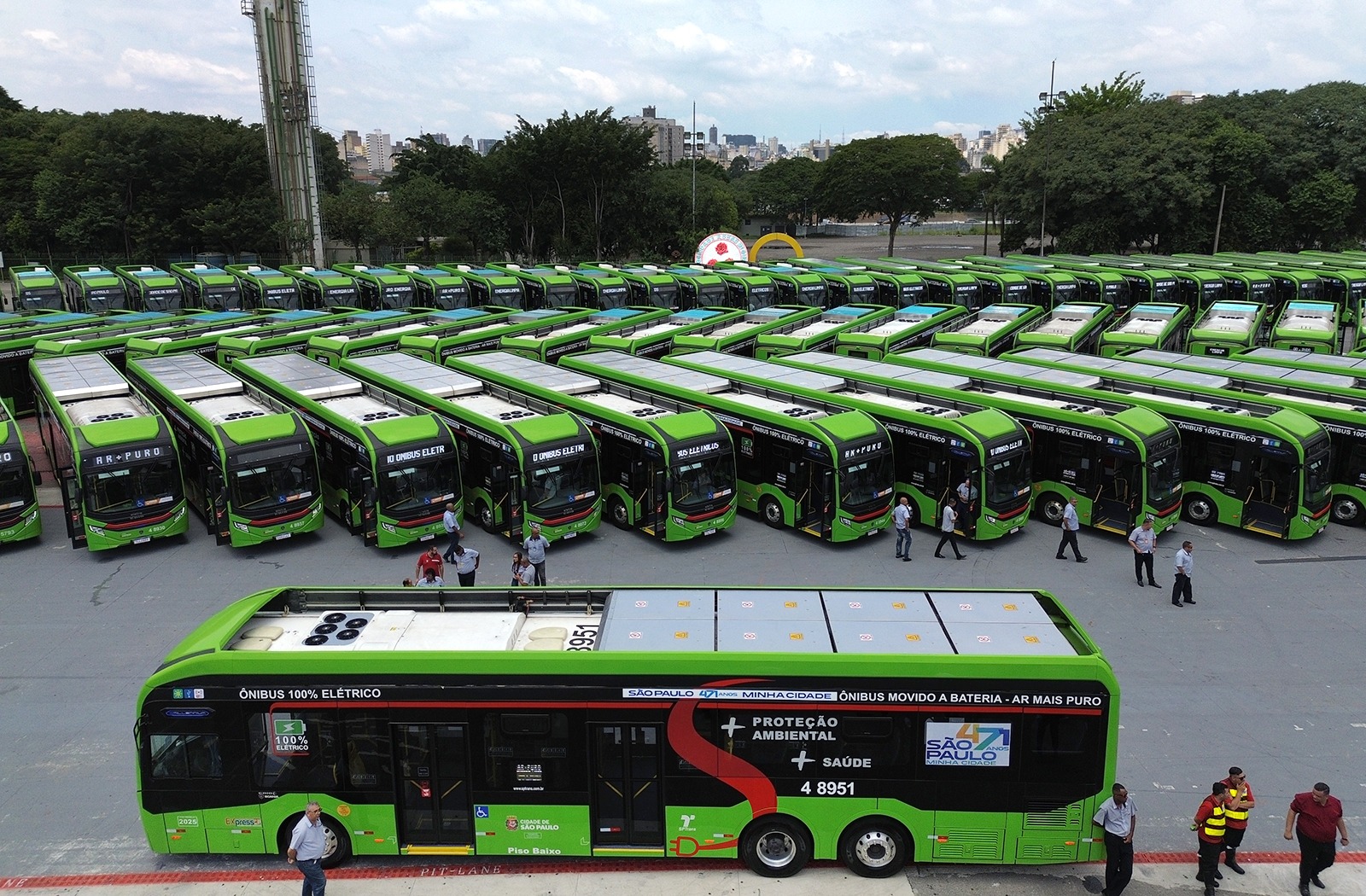
After the city delivered 250 new vehicles on September 30, São Paulo's electric bus fleet reached 2,009 vehicles — 1,821 battery-electric buses and 188 trolleybuses — about 14.7% of the municipal fleet, but still 591 short of the 2,600 target set for the end of 2024.
Brazil's largest city has passed 2,000 electric buses in its municipal system. The city delivered 250 new vehicles on September 30, bringing the fleet to 2,009 zero-emission buses: 1,821 battery-electric buses and 188 trolleybuses. The city says São Paulo accounts for more than 80% of Brazil's electric bus fleet. (Photo: file image of an electric bus.)
Fourfold growth in under two years
São Paulo had only 502 electric buses at the end of 2024. A single delivery of 500 buses in June 2026, followed by 250 more in September, roughly quadrupled the fleet. Bus number 2,000 was a 21.5-metre superarticulated bus for operator Via Sudeste, with capacity for 143 passengers. The 250 new buses, 49 of them articulated, were fully financed by the development bank BNDES with R$547.7 million.
Still behind the original target, under a subsidy model
São Paulo's 2021–2024 targets programme aimed to electrify 20% of the fleet, about 2,600 buses, by the end of 2024; it reached only 502. Today's 2,009 buses are still 591 short of that figure, about 77% of it. Under the city's subsidy model, private operators buy the electric buses while municipal support covers the price difference against an equivalent diesel bus, funded by loans from Banco do Brasil, BNDES and Caixa. From January to September 2026, the city committed R$1.285 billion to 20 operators and consortia. Mayor Ricardo Nunes said the fleet saves 70 million litres of diesel and 174,000 tonnes of CO2 a year; both figures are municipal estimates.
Sources: São Paulo city government; LEMOB News; Diário do Transporte (2026-11-03).
💬 Comments
No comments yet. Be the first!