 N環球

Schaeffler's humanoid actuators become the exclusive foundational part of Nvidia's Newton physics engine
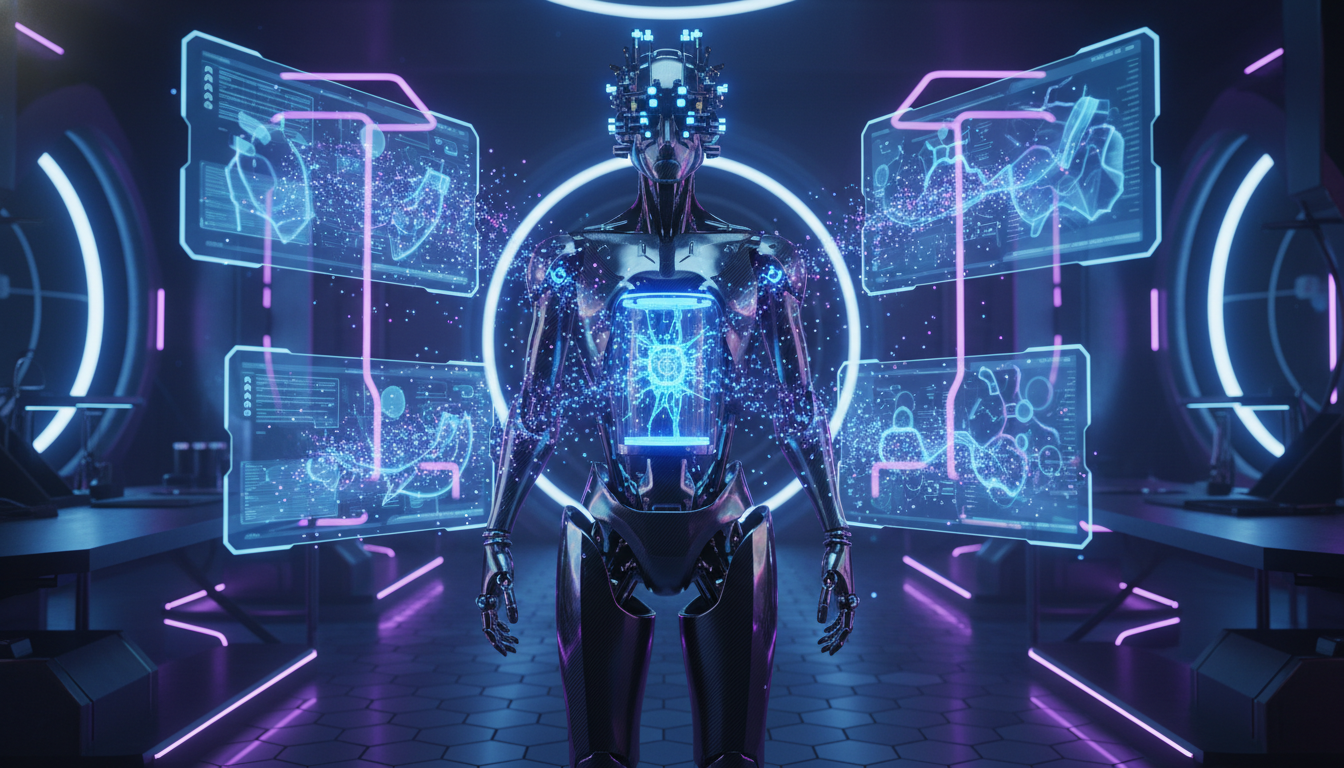
German supplier Schaeffler announced on Oct. 21 that its humanoid robot actuators are the exclusive foundational component of Newton, Nvidia's open-source physics engine in Isaac Lab and Isaac Sim, letting developers train on high-fidelity digital twins before building hardware.
Why it matters
The most expensive part of building a humanoid robot isn't just the hardware — it's building it wrong and iterating. With Schaeffler's real actuator models now inside Nvidia's open-source Newton engine, developers can "drive the real machine" in simulation first and only cut metal once the policy works. That's a real cost reduction on the road from lab prototypes to production humanoids.
Full report
Schaeffler, the German motion technology company, announced on Oct. 21 from Fort Mill, South Carolina, a collaboration with Nvidia: its advanced actuator technology becomes the "exclusive foundational component" of Newton, the open-source physics engine for robot learning and simulation inside Nvidia's Isaac Lab and Isaac Sim frameworks.
Schaeffler says a typical humanoid has about 26 actuators, not counting the hands. Its digital twin models each actuator with high fidelity while running fast enough for large-scale simulation and machine-learning training. The goal is to close robotics' long-standing "sim-to-real" gap, and longer term to reach "zero-shot deployment," where robots trained virtually can perform in the real world.
Amit Goel, head of robotics ecosystem at Nvidia, said developers can design robot hardware, train policies with reinforcement learning in Isaac Lab, and validate them at scale in Isaac Sim. Nvidia listed the deal in its Isaac platform announcement the same day at GTC Berlin.
The same release announced that Isaac Lab 3.0 is now generally available, supporting Newton and PhysX physics engines; a new open-source runtime framework, Isaac OS; and three open-source reference workflows for DGX Station to refine the GR00T 1.7 model, train dexterous manipulation skills, and post-train Cosmos world models for synthetic data generation.
💬 Comments
No comments yet. Be the first!