 N環球

OpenAI, Google and Anthropic use AI to design their own chips, challenging Nvidia's dominance
Business Insider reported on November 24 that OpenAI, Google and Anthropic are using AI to help design their own chips, reducing reliance on Nvidia hardware; OpenAI reported 10% to 15% gains in chip design efficiency, Anthropic's model ported workloads to AMD chips in about three days, and J.P. Morgan data shows Nvidia still accounts for 28% of announced future computing capacity.
OpenAI, Google and Anthropic are using artificial intelligence to help design their own chips, in a push that could reduce reliance on Nvidia hardware, Business Insider reported on November 24. The report describes a hardware extension of recursive self-improvement, the idea that AI systems improve the capabilities of later systems, a dynamic that had mostly played out in software but is now reaching chip development.
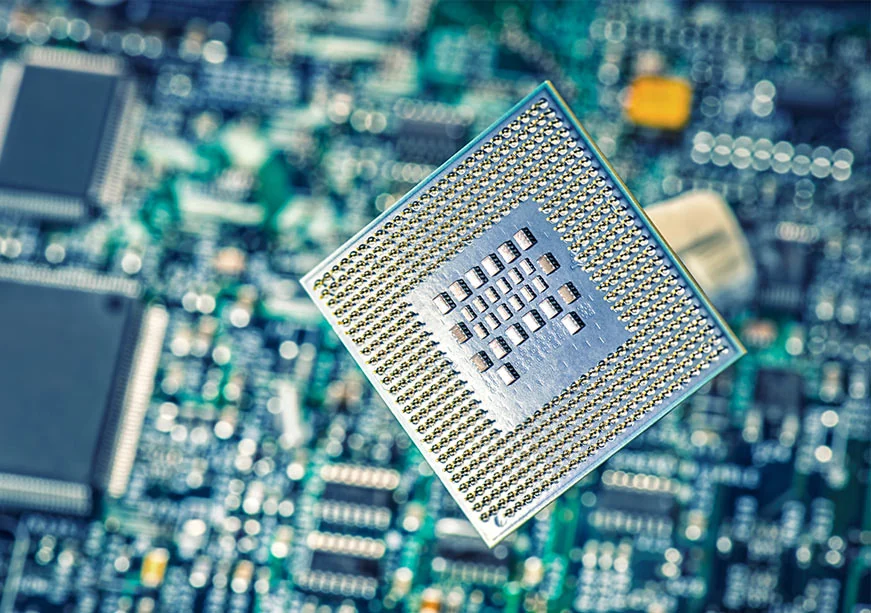
Photo caption: File photo: A close-up of a computer chip. (Photo: ORF)
Three labs pursue their own silicon
OpenAI has reported improvements in chip design efficiency of between 10% and 15%, while Anthropic is building an internal chip design team and Google's custom Tensor Processing Units are emerging as a competitive alternative to Nvidia's processors, the report said. In a related development, Anthropic disclosed that its Claude Mythos model could move some AI workloads to AMD's MI355X graphics processors in about three days, compared with a previous process that took six to 12 months and dozens of engineers, with almost no human intervention.
J.P. Morgan data: Nvidia still holds 28% of announced capacity
A revised analysis by Michael Cembalest of J.P. Morgan Asset & Wealth Management found that, in a sample of announced computing capacity agreements for projects expected to be deployed from 2026 onward, Nvidia accounted for 12.11 gigawatts, or 28%. The same sample listed 10 gigawatts associated with custom chips and Broadcom (23%), 8 gigawatts of AMD GPUs (18%), 7 gigawatts of Amazon's Trainium (16%), 6 gigawatts of Google's TPUs (14%) and 0.75 gigawatts of Cerebras (2%). These are announced agreements, not installed infrastructure, and equal power capacity does not necessarily produce equal volumes of AI output; performance depends on the processors, memory and network involved.
Supplier mix is diversifying; the threat is still potential
Purchasing is diversifying too: OpenAI has contracted for AMD GPU capacity, while Anthropic has agreements involving AMD and uses processors from Google, Amazon and Nvidia; Google and Amazon also develop their own AI chips. Cembalest said the competition deserves attention as alternatives make progress on some tasks, particularly inference, when a trained model generates responses: customers could find competing systems economical for part of the work they currently run on Nvidia GPUs. Business Insider framed the shift as a potential challenge to Nvidia's position, rather than evidence that the company has already lost its lead. This site previously reported on OpenAI's use of AI in chip design; the new report broadens the picture to three labs.
💬 Comments
No comments yet. Be the first!