 N環球

Anthropic mathematician says he proved the Riemann hypothesis with Claude; computer checks pass, verdict still open
Anthropic mathematician Levent Alpöge said on November 20 that he and Claude have discovered a proof of the Riemann Hypothesis, released as Lean formal code; independent machine checks by an MIT mathematician passed all 175,187 modules with zero errors, but the proof has not been peer-reviewed and the Clay Institute still lists the problem as unsolved.
Levent Alpöge, a mathematician on Anthropic's technical staff, posted a four-page note on his personal website on November 20 saying that he and the company's AI model Claude have discovered a proof of the Riemann Hypothesis. "I believe I have, working with Claude, discovered a proof of the Riemann Hypothesis," he wrote. He added that the same method also proves the Generalized Riemann Hypothesis.
No conventional paper, only computer code
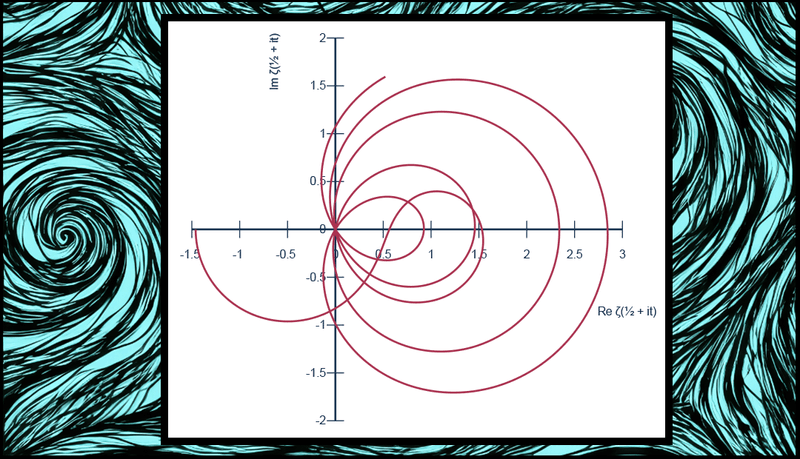
The Riemann Hypothesis, posed by the German mathematician Bernhard Riemann in 1859, concerns the distribution of prime numbers: it asserts that every nontrivial zero of the Riemann zeta function lies on a single vertical line in the complex plane, where the real part equals one half. In 2000, the Clay Mathematics Institute listed it among its seven Millennium Prize Problems, with a $1 million prize that remains unclaimed. Alpöge published no conventional paper: he says the full argument would run to more than 250,000 pages in ordinary mathematical prose, so he released only the short note and a proof written in Lean, a formal language, split into 14 downloadable archives.
Alpöge also says frankly that he does not yet command all of the mathematics in the proof, and that Claude pulled far ahead of him in the final stretch. According to a timeline in the note, the decisive work took place over 41 days, from October 6 to November 16. He says he pointed Claude at two key ideas and asked it to find the matching structure, adapting Stepanov's method with a weighted count of primes and a chain of objects called theta lifts.
Computer checks pass, so far
A formal proof has one great advantage: it can be machine-checked, with Lean's kernel testing each step of the reasoning. A verification page by MIT mathematician Andrew Sutherland shows that, as of November 20, all 175,187 modules in the Lean version had been processed, with Lean's kernel and independent checkers such as nanoda passing; the five main theorems depend only on Lean's three standard axioms; and the definitions used match those in Mathlib, Lean's shared mathematics library, rather than being written specially for this proof.
But passing a machine check is not the same as a proof being accepted: experts must still confirm that the code's definitions really express the Riemann Hypothesis, and understand the mathematical ideas behind the argument. James Maynard, Regius Professor of Mathematics at the University of Oxford and a 2022 Fields Medal winner, said: "If this fully checks out, it is clearly a historic milestone in mathematics." Youness Lamzouri, a professor of mathematics at the University of Lorraine, cautioned that checking a computer-generated proof is only the beginning, and that understanding how it works could take months or even years.
A rival human proof on the same day
Coincidentally, a competitor appeared the same day: Stanford mathematics professor Ravi Vakil said a postdoctoral researcher at the university had independently submitted a proof of the Riemann Hypothesis, produced without AI. Neither proof has been peer-reviewed.
What happens next
The Clay Mathematics Institute still lists the Riemann Hypothesis as unsolved, and the $1 million prize has not been awarded. Whether Alpöge's claim stands depends on two things: independent teams rebuilding the Lean code and confirming the definitions are correct, and the mathematical community gradually understanding the argument. Until then, it is a serious claim that has passed initial machine checks — not yet an accepted theorem.
For context, Anthropic announced in August that Claude had raised the guaranteed minimum share of zeta zeros known to lie on the critical line from 41.6% to 67.2%, while stating clearly at the time that the hypothesis had not been proved. If the new claim holds, it would be a leap from "two-thirds" to "all".
💬 Comments
No comments yet. Be the first!