 N環球

Two new lines of evidence that banned Nvidia Blackwell chips reached China, with researchers estimating over 1.5 GW of compute
Research firm SemiAnalysis estimates that more than 1.5 gigawatts of export-restricted Nvidia chips ultimately ended up in China, while a forensic analysis by former OpenAI researcher Will DePue says six Chinese AI models carry the fingerprints of Blackwell chips. Neither finding proves any company broke the law, but both sharpen the debate over chip controls.
Two findings published this week offer new evidence on how Nvidia Blackwell chips banned from sale to China may have reached the country: research firm SemiAnalysis estimates that more than 1.5 gigawatts of restricted Nvidia chips ultimately ended up in China, and a forensic analysis by a former OpenAI researcher says six Chinese AI models carry the fingerprints of Blackwell chips. Neither finding proves that any company broke the law, but together with calls in Congress to tighten controls and the resignation last week of Nvidia founder Jensen Huang, they have put chip controls back in the spotlight.
SemiAnalysis: more than 1.5 GW of restricted chips reached China
SemiAnalysis founder Dylan Patel said in a newsletter on November 12 that the firm's Accelerator Model, which tracks AI chips from production to final destination, shows more than 1.5 gigawatts of export-restricted Nvidia chips “ultimately ended up in China”, excluding chips Nvidia built specifically to comply with export rules, such as the H20 and H800. The firm gave no unit count or split by chip generation. Tom's Hardware, reporting the estimate on November 13, worked it backward from rated chip power: about 1.5 million GPUs if all were 1,000-watt B200s, or about 2.1 million if all were 700-watt H200s, with a mix landing in between. SemiAnalysis also said the Commerce Department “now also finally believes” the estimate, but cited no Commerce document and did not say how it learned of the department's view.
SemiAnalysis links large-scale smuggling and pressure from the US intelligence community to Huang's resignation, but offers no direct evidence for that link. Huang stepped down on November 12 as Nvidia's chief executive, president and director; chief financial officer Colette Kress is interim chief executive.
Forensic analysis: six Chinese models carry Blackwell fingerprints
Former OpenAI researcher Will DePue published a forensic analysis on November 12 saying six Chinese AI models — DeepSeek-V4-Flash, DeepSeek-V4-Pro, Moonshot AI's Kimi K3 and K3.1-Pro, MiniMax-M3 and Ant Group's Ling-3.1-flash — carry the fingerprints of Nvidia Blackwell chips in their weights. The method analyses the starting values a model's weights get before training: the core count of the chip that generated them leaves a distinct statistical signature — 132 cores for Hopper chips, 148 for Blackwell B200/B300 chips and 152 for GB200/GB300 racks. DePue says the six models match Blackwell at 49 to 1,385 standard deviations, far above the roughly eight standard deviations that chance could produce at most; running the process on actual Blackwell chips recreated the pattern in Kimi K3 and DeepSeek-V4-Flash precisely, and he published his verification code on GitHub.
DePue estimates the five training runs he studied used about 12,000 Blackwell GPUs in total, worth more than $500 million in hardware; Kimi K3 alone needed an estimated 4,500 chips over about 70 days. Senior researchers at OpenAI and Anthropic independently checked his work, according to reports. DePue is explicit about the limits of his analysis: the fingerprint shows which hardware generated the starting weights, not where the chips were, who owned them or how they were obtained, and Chinese firms can rent compute in data centres abroad, so the results are “not a finding that any law was broken”. The only other explanation would be a throttled AMD MI300X, also restricted, and DePue says minute rounding quirks let him exclude AMD, at least in DeepSeek-V4-Flash's case.
Control loopholes and the debate in Congress
The two findings land as investigations and debate over smuggling intensify. Bloomberg, citing documents, reported that Moonshot AI signed a contract in August to lease 32 Super Micro servers equipped with B300 chips, stored in Qingyang, Gansu province, for a combined 432 million yuan, with per-server valuations about 350% above US prices; Moonshot denied the allegations. The Information reported that 32 B300 GPUs were detected last month on the network of China Telecom. Malaysia said on November 13 it was working to determine whether servers and AI chips imported by Speedmatrix, a local unit of Megaspeed, were re-exported; Prime Minister Anwar Ibrahim said there was no indication of any such shipment from Malaysia.
In Congress, House Speaker Mike Johnson said on November 12 there was growing consensus on limiting chip exports to China, and lawmakers are pressing for at least four bills: the AI Overwatch Act, which would give Congress more power over advanced AI chip exports; the Chip Security Act, which would require companies to track the location of advanced AI processors; the Match Act, which would pressure US allies to restrict sales and maintenance of advanced chipmaking equipment destined for China; and the Remote Access Security Act, which would give the Commerce Department tools to stop Chinese firms renting overseas data-centre capacity to access Nvidia chips. Huang is expected to testify before Congress before Thanksgiving on November 26. Chinese AI shares fell on Friday on the news, with Z.AI down 12% and MiniMax down 8.4%. SMIC, China's biggest contract chipmaker, said the same day that the AI chip supply chain would stay tight through 2027.
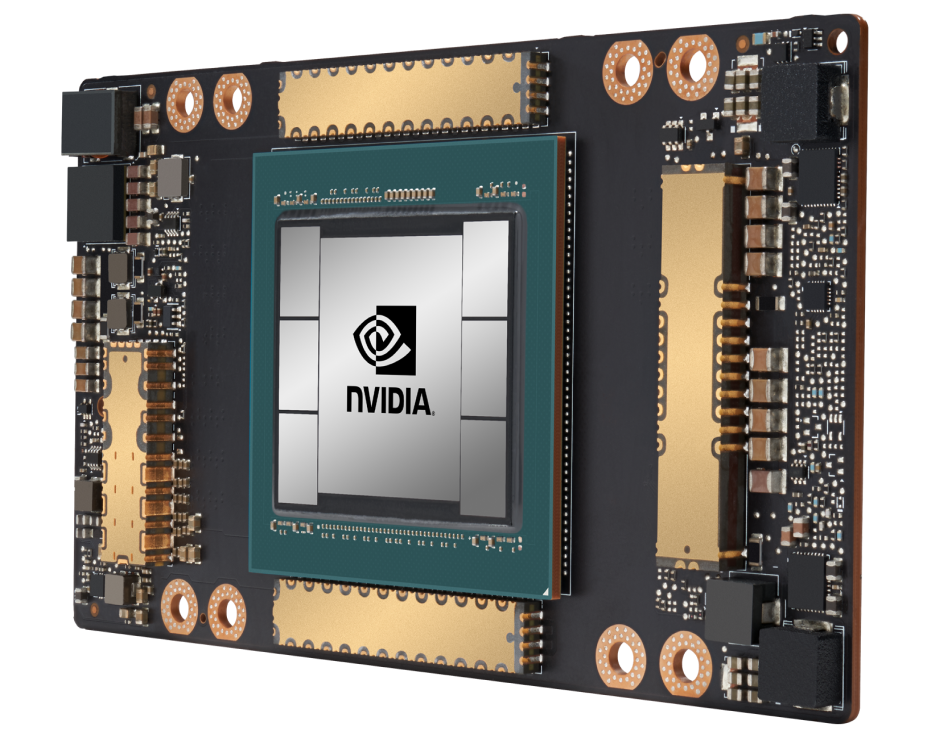
(File photo: an Nvidia data-centre GPU module, the A100, not a Blackwell chip. Image: Hyperstack.)
💬 Comments
No comments yet. Be the first!