 N環球

FDA orders Ozempic, Wegovy and other GLP-1 drugs to carry warning on rare risk of sudden vision loss
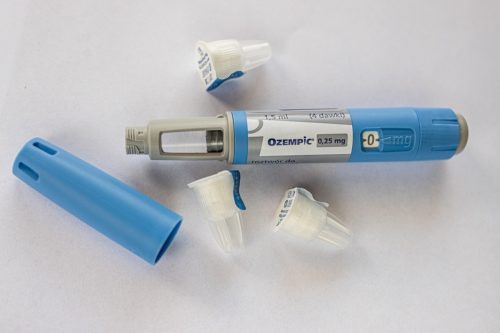
The U.S. Food and Drug Administration on Monday issued a drug safety communication requiring all GLP-1 receptor agonist medicines to add a warning about the potential risk of non-arteritic anterior ischemic optic neuropathy (NAION), a rare eye condition that can cause sudden, painless vision loss in one eye, including permanent loss of sight.
The U.S. Food and Drug Administration (FDA) on Monday (November 9) issued a drug safety communication requiring all glucagon-like peptide-1 (GLP-1) receptor agonist medicines — including Ozempic, Wegovy, Mounjaro and Zepbound — to add a warning about the potential risk of non-arteritic anterior ischemic optic neuropathy (NAION) to the Warnings and Precautions section of their labelling. NAION is a rare condition that can cause sudden, painless loss of vision in one eye, including permanent loss of sight. (Photo: file photo of an Ozempic injection pen.)
The warning covers the whole GLP-1 class
The labelling change applies to the entire class, not to individual brands. The FDA listed semaglutide (Ozempic, Rybelsus, Wegovy), tirzepatide (Mounjaro, Zepbound), liraglutide (Victoza, Saxenda), dulaglutide (Trulicity), exenatide, and orforglipron (Foundayo), an oral small-molecule drug approved in 2026. The agency said cases of NAION have been reported in post-marketing surveillance for every GLP-1 drug currently on the market.
What the 126-trial analysis found
The decision rests on a meta-analysis of 126 randomised controlled trials covering 134,253 patients and 288,879 person-years of exposure, in which investigators found 15 probable NAION events — 10 in patients on a GLP-1 drug, five on placebo and none on another glucose-lowering medicine. The incidence rate was 6.4 events per 100,000 person-years on a GLP-1 drug, against 3.8 on a comparator. The FDA was candid that the evidence has limits: animal data identified no mechanism by which GLP-1 drugs could raise the risk, and a retrospective study using the agency's Sentinel real-world data produced results that varied by comparator. In the general population, background NAION incidence in adults over 50 is about 2.3 to 10.2 cases per 100,000 people per year.
A 2024 study prompted the review
The FDA began its review after a study published in July 2024 in JAMA Ophthalmology by Hathaway and colleagues reported a possible association between semaglutide and NAION. Last year, the European Medicines Agency's safety committee said NAION may affect up to 1 in 10,000 people taking semaglutide for at least a year.
Not a withdrawal or recall
The FDA stressed that the action is a labelling change only and does not withdraw, recall or restrict any product. Eli Lilly told Reuters the communication applies to all medicines with GLP-1 receptor agonist activity and contains no findings specific to Lilly medicines.
Report symptoms immediately
The FDA advises health care professionals to tell patients to immediately report sudden onset of acute, painless loss of vision, visual field deficits or other visual disturbances in one eye, and to refer suspected NAION promptly to an ophthalmologist. Clinicians should consider stopping the GLP-1 drug in patients who develop NAION, unless the benefits of treatment clearly outweigh the risk. Risk factors listed by the FDA include smoking, diabetes, high blood pressure, sleep apnea, anemia and kidney disease.
💬 Comments
No comments yet. Be the first!