 N環球

DeepMind's Gemini agent teams find faster quantum algorithms, cutting arithmetic costs up to 290-fold
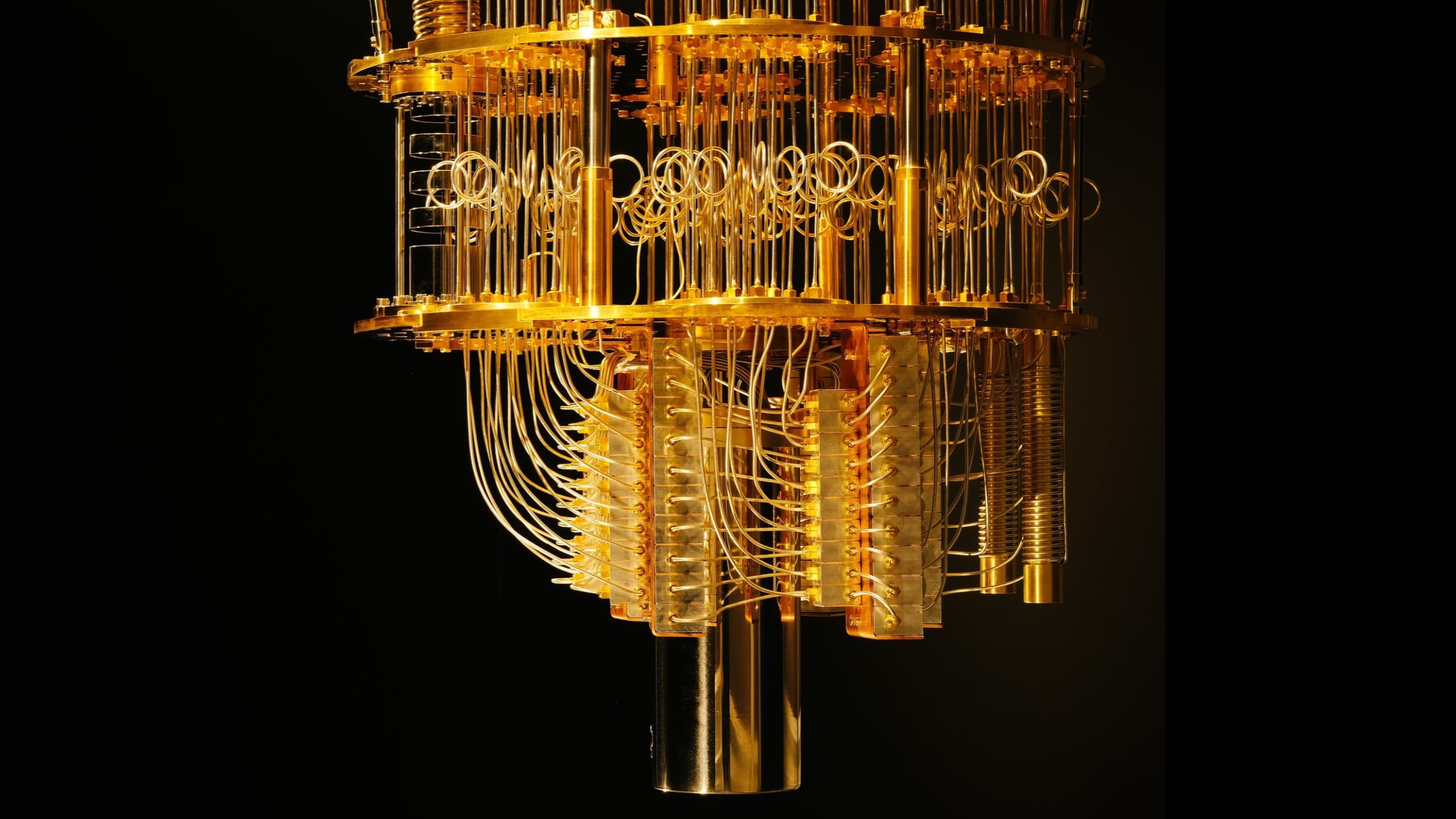
Google DeepMind and Google Quantum AI said teams of Gemini 4 agents improved several known quantum algorithms, cutting fusion simulation costs 11.8-fold and arcsin arithmetic costs 290-fold, with every result formally verified in the Lean theorem prover and open-sourced on GitHub.
Google DeepMind and Google Quantum AI on Monday (November 23) published research in which teams of Gemini 4 agents improved several known quantum algorithms. Every result was formally verified using Lean, a theorem prover, and the team open-sourced its Lean library, problem specifications and verified solutions on GitHub.
Photo caption: File photo: an IBM quantum computer. (Photo: ScienceAlert)
Fusion simulation costs down 11.8-fold
For inertial confinement fusion simulations, the agent teams cut the computing cost 11.8-fold and lowered the required memory from 5,650 to 4,338 error-corrected qubits. Photochemistry simulations became about 8 times cheaper, and simulations of Cytochrome P450, an enzyme that breaks down most human medicines and matters for drug design, became about 2.5 times cheaper, with memory falling from 481 to 333 qubits.
Breakthroughs in fundamental algorithms too
The teams also improved a fundamental quantum algorithm and a widely used arithmetic building block: a 2.57x speedup for a specific implementation of Grover's algorithm, and a 290x cost reduction for arcsin, a common routine used by many quantum algorithms to load numbers into quantum states. DeepMind said running these algorithms in scientific simulations would still demand more resources than the first error-corrected quantum computers are likely to provide, but the improvements are significant.
Agent collaboration plus mathematical proof
In the method, separate independent agent teams worked on each problem; ideas were verified with Lean before entering a shared notebook, and every four hours the teams met at a virtual conference to trade, debate and compare ideas. The paper is published on arXiv (2611.09822). It is worth noting that these figures are logical resource estimates for future error-corrected quantum machines, not results run on real quantum hardware, and some comparison baselines were built by the authors themselves.
DeepMind said the same approach could accelerate other areas of quantum computing research, and scientific discovery more broadly.
💬 Comments
No comments yet. Be the first!