 N環球

Voyager 1 passes one light-day from Earth, the farthest human-made object ever
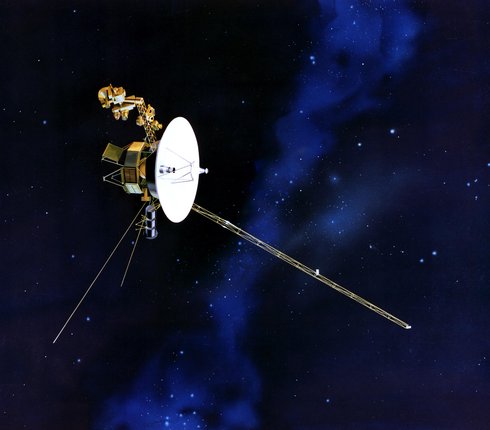
NASA confirmed on November 19 that Voyager 1 has travelled beyond one light-day from Earth — about 16 billion miles — becoming the most distant human-made object in history.
NASA confirmed on Thursday, November 19, that Voyager 1 has become the first spacecraft to travel beyond one light-day from Earth — the distance light travels in a day, about 16 billion miles (26 billion km). It is the most distant human-made object ever.
It crossed the line on Wednesday; the signal took a day to arrive
The probe passed the distance at 5:16 a.m. EST on Wednesday, and the radio signal took about 24 hours to reach Earth, where it was received at the Deep Space Network station in Madrid and confirmed at the Jet Propulsion Laboratory (JPL) in California. It has been flying for 49 years, 2 months and 11 days, at almost 38,000 miles per hour (61,000 kph).
Heading for a star 17 light-years away
Voyager 1 is flying in the direction of the star Gliese 445, some 17 light-years from Earth, and would pass within about 1.7 light-years of it in about 40,000 years if it keeps its current pace. The probe carries the Golden Record, a message about Earth and humanity.
Power runs out in 2036, but the mission is 'never going to end'
NASA officials said the mission will continue even as the aging probe runs low on power and experiences technical anomalies; it is expected to lose power in 2036. JPL engineer Nshan Kazaryan announced the confirmation, saying: "After 16 billion miles of exploration, Voyager 1 continues its journey into the unknown." Its twin, Voyager 2, is currently very healthy and is expected to reach the light-day distance in November 2035.
(Image: illustration of Voyager 1, source: NASA/JPL.)
💬 Comments
No comments yet. Be the first!