 N環球

Nvidia privately said chip tracking is feasible, lawmaker tells MIT Technology Review
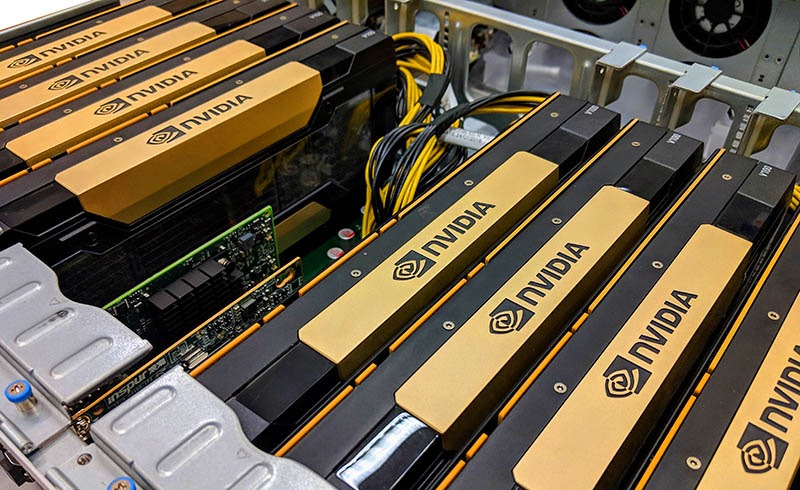
Rep. Bill Foster said Nvidia representatives told him in private technical talks that the location checks in the Chip Security Act were doable — "yeah, of course we can do this" — while the industry association publicly called them "potentially infeasible."
US chip giant Nvidia privately acknowledged that tracking the location of advanced artificial intelligence chips to fight smuggling is technically feasible, contradicting the semiconductor industry's public claim that it might not be. The account comes from Rep. Bill Foster, an Illinois Democrat and a co-sponsor of the Chip Security Act.
The private answer: "Yeah, of course we can do this"
In an interview with MIT Technology Review on November 12, Foster said that during technical discussions with Nvidia representatives, their reaction to the bill's anti-smuggling measures was "yeah, of course we can do this." But he stressed: "They never put anything in writing." Nvidia did not respond to MIT Technology Review's requests to confirm Foster's account.
Industry group publicly opposed it in March
In March 2026, the Semiconductor Industry Association (SIA), of which Nvidia is a member, publicly opposed the bill, calling its chip-tracking mandates "new, untested, and potentially infeasible." Foster serves on the House Committee on Science, Space, and Technology.
What the bill would require
Introduced in May 2025, the Chip Security Act would require companies to verify where advanced AI chips end up after export, to prevent them from being smuggled to China. The draft would allow verification through facility inspections, company attestations, or a ping-based mechanism in which a chip sends a location signal each time it powers up. It is one of three chip-security measures under consideration for inclusion in the Senate's National Defense Authorization Act.
Nvidia's Fleet Intelligence tool, launched in December 2025, lets customers monitor how their advanced chips are performing across data-centre locations; the company confirmed to Reuters that it can show the country in which a GPU is operating. It has not said whether the tool could be used to fight smuggling.
It can locate, but not disconnect
Even if the bill passes, the tracking mechanism would only tell investigators where the chips are; it would not let anyone switch them off remotely if smuggling is discovered. Foster said he plans to introduce stricter legislation next year requiring advanced GPUs to verify their authorisation before connecting to the internet.
The issue is drawing renewed attention after Nvidia co-founder Jensen Huang resigned as chief executive on November 12. Huang had long argued for easing export controls on chip sales to China. Foster's account is his own characterisation of a private exchange, not a written commitment from the company. (Sources: MIT Technology Review, Reuters)
💬 Comments
No comments yet. Be the first!