 N環球

Trump Administration Formally Proposes New Tariffs on 14 Economies; China Faces 20%
The U.S. Trade Representative has completed an eight-month Section 301 investigation and formally proposed new tariffs of up to 20% on 14 economies including China, the EU and Japan, with a public comment period running to January 5, 2027, hearings starting January 25, and the earliest effective date in January 2027.
The Office of the U.S. Trade Representative on Wednesday (November 25) formally proposed new tariffs on 14 major trading partners, including China and the European Union, accusing the economies of using government subsidies to sustain excess industrial capacity that harms American manufacturers. It is the Trump administration's latest tariff push under Section 301 of the Trade Act of 1974, after the Supreme Court struck down its emergency-powers tariffs in February.
The proposed rates at a glance
China faces a 20% new tariff, which would stack on roughly 25% in duties from President Donald Trump's first term, bringing the combined rate on affected goods to about 45%. Vietnam would face 20% with a trade deal and up to 35% without one; India 17% with a deal and up to 25% without; Bangladesh, Cambodia, Indonesia, Malaysia and Thailand up to 18%; the European Union, Japan, South Korea, Taiwan and Switzerland a 15% ceiling; and Singapore 10% with a deal and up to 20% without. Mexico and Norway are not on the list for now, with their investigations still under review. According to Invezz calculations from U.S. Census Bureau and USTR data, the 14 economies supplied $2.07 trillion in U.S. goods imports in 2025, or 60.5% of America's total, led by the EU at $632.9 billion and China at $308.7 billion.
No stacking with other duties, but a comment process comes first
The new duties would not stack on the forced-labour duties imposed in July or on Section 232 tariffs on cars, steel and aluminium, and would not exceed the tariff caps in trade deals partners have already signed with the administration. The specific rates are due in a Federal Register notice on Wednesday; the public comment period runs to January 5, 2027, USTR hearings begin on January 25, and the earliest effective date is January 2027. A senior U.S. official said the additional rate on China could climb to 40% if the U.S.-China trade truce, due to expire on January 10, 2027, collapses.
Background: an eight-month Section 301 investigation
The investigation was opened on March 11 by U.S. Trade Representative Jamieson Greer, covering 16 economies; it concluded that the industrial policies of 14 of them burden U.S. commerce. Trump met Chinese President Xi Jinping last week on the sidelines of the APEC summit, and a senior U.S. official described the meeting as “really great,” adding: “We know that they don't like these actions, but we are seeking stability with the Chinese. China is seeking stability with us.” China has previously rejected the overcapacity charge, calling it a “false issue.”
Market reaction
After The Wall Street Journal first reported on Tuesday that the administration was preparing the tariffs, U.S. stock futures fell, with Nasdaq 100 futures down 2.38%. Asian markets also came under pressure on Wednesday: Hong Kong's Hang Seng Index closed down 1.14% at 21,966.01, below the 22,000 mark, and the Hang Seng Tech Index fell 2.56%, led lower by AI hardware and lithium battery shares.
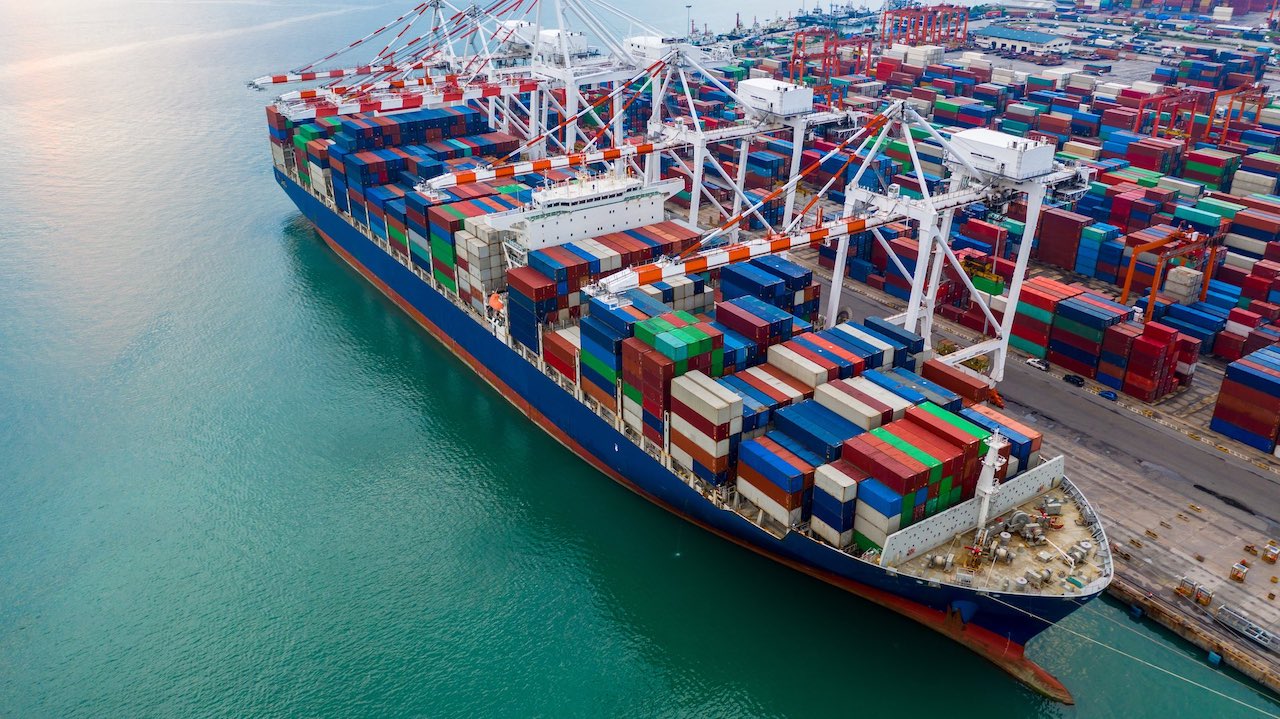
File photo: a container ship docked at a port. (Photo credit: Adobe Stock)
💬 Comments
No comments yet. Be the first!