 N環球

Germany's NVision shows a new path to quantum chips in Nature paper, borrowing phone-display techniques
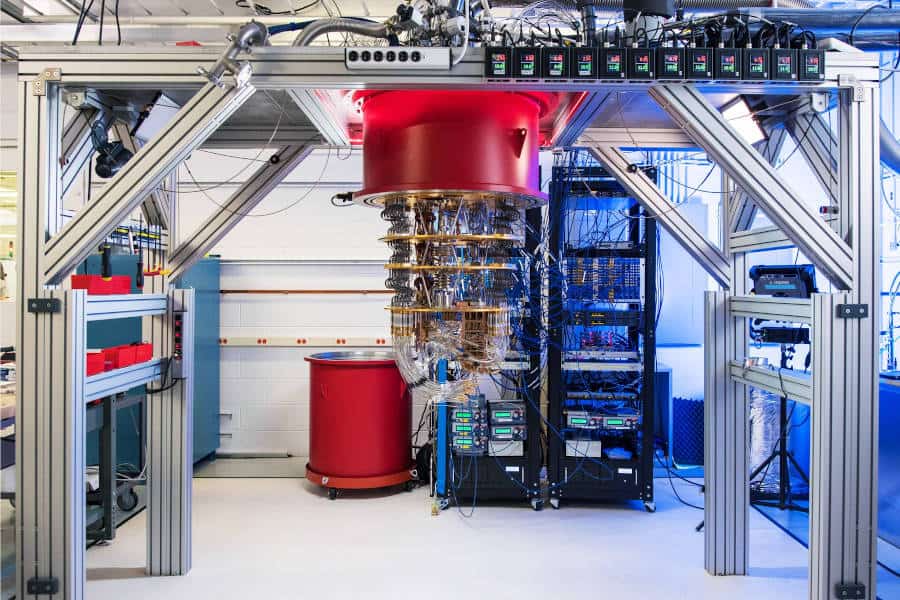
German startup NVision published a paper in Nature showing how an organic molecule similar to those used in OLED displays can be laid as a thin layer over a conventional chip to make a quantum chip, and plans first chips with US chipmaker HyperLight.
German startup NVision published a paper in the scientific journal Nature on Wednesday, showing a new way to make quantum computing chips that borrows from manufacturing techniques widely used in smartphone displays.
A discovery from medical devices
NVision made the discovery while working in a different field: improving medical devices. The company had developed a machine that can align the spins of electrons in special sugar molecules, making the sugars a thousand times easier for MRI machines to see, which in turn helps identify cancer cells that consume the sugars far faster than healthy cells.
The paper shows the technology can also work on organic molecules similar to those used in organic light-emitting diode (OLED) displays. NVision used AI to simulate hundreds of candidate molecules and then physically synthesized about 40 of them, until it found one that could be laid down in a thin layer over a chip made with conventional technology to create a quantum chip. Chief technology officer Ilai Schwartz told Reuters: “We found this ‘Goldilocks’ molecule.”
Next step: the whole machine, not just the molecule
NVision also said on Wednesday that it is partnering with US-based chipmaker HyperLight to make its first chips. Chief executive Sella Brosh said the company plans to build an entire quantum computer rather than sell only its specialized molecules, adding: “Eventually, what we will sell is a rack-ready computer.”
Startups and tech giants such as Microsoft and IBM are racing to build quantum computers, which hold the promise of solving problems that would take conventional machines thousands of years. NVision has raised $120 million in funding from public and private sources such as Abbott Laboratories; a Reuters correction notes an earlier figure of $155 million was wrong.
💬 Comments
No comments yet. Be the first!