 N環球

Canada unveils 2027–2029 immigration levels plan: 380,000 permanent residents a year, plus a path for 200,000 in-Canada temporary residents
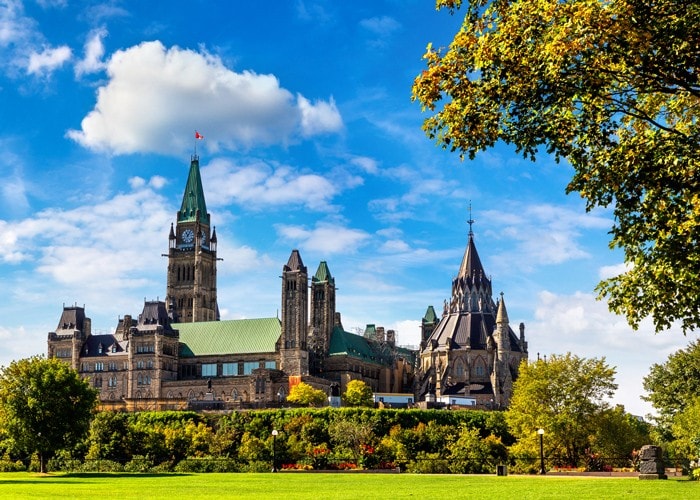
The 2027–2029 Immigration Levels Plan, published with Budget 2026 on November 5, keeps the annual permanent resident target at 380,000 and adds a new pathway allowing up to 200,000 temporary residents already in Canada to become permanent residents by the end of 2027; on that basis, new permanent residents in 2027 could reach 622,000.
The Canadian government published its 2027–2029 Immigration Levels Plan on November 5 alongside Budget 2026: the annual permanent resident target stays at 380,000 (within a range of 352,500 to 422,000), with a major new measure allowing up to 200,000 temporary residents already in Canada to transition to permanent residence by the end of 2027. Immigration news site CIC News calculates that new permanent residents in 2027 could therefore reach 622,000.
The 200,000 in-Canada pathway is the real news
Under the budget, 100,000 of the 200,000 transition spaces will go to skilled workers through Express Entry and the Provincial Nominee Program (PNP), delivered in collaboration with the provinces and territories. It is important to note that the 380,000 permanent resident target and the 370,000 temporary resident target are identical to the notional 2027 figures in last year's 2026–2028 plan — the targets have not been raised; the real change is the new in-Canada transition pathway. In addition, of the 148,000 permanent resident admissions promised under last year's one-time initiatives (115,000 protected persons and 33,000 in-Canada workers), about 100,000 remain to be issued between September 2026 and December 2027.
Breakdown of the annual targets
The 380,000 midpoint target for each of 2027, 2028 and 2029 breaks down into 244,700 under economic immigration, 81,000 under family reunification, 49,300 under refugees and protected persons, and 5,000 under humanitarian and compassionate and other categories. For temporary residents, the 2027 target is 370,000 — 220,000 temporary foreign workers (50,000 under the Temporary Foreign Worker Program, which requires a labour market impact assessment, and 170,000 under the International Mobility Program, which is exempt) and 150,000 international students — with the same figures for 2028 and 2029.
Funding and delivery
Immigration, Refugees and Citizenship Canada (IRCC) receives $56.9 million over four years to deliver the plan, with a further $205.4 million to follow, while the transition-to-permanent-residence measures receive $302.3 million over four years. Prime Minister Mark Carney told Parliament on the day that Canada has "taken back control of immigration"; Conservative Leader Pierre Poilievre criticised the figures as "cooking the books." The budget also folds immigration levels into spending projections and aims to reduce temporary residents — including international students and foreign workers — to 5% of the population.
The immigration minister is expected to publish the eligibility criteria and opening dates for the in-Canada transition pathway in the coming months; temporary residents already working or studying in Canada should watch for the official announcement.
💬 Comments
No comments yet. Be the first!