 N環球

Paraguay's Peña offers resignation, Congress declines to accept it as impeachment trial opens
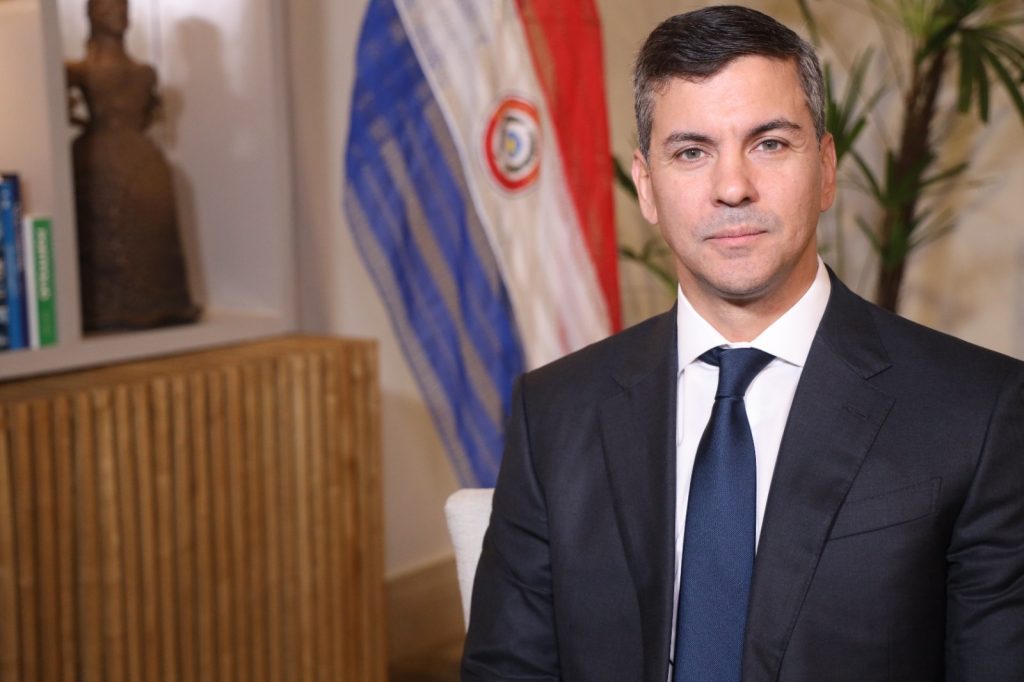
Paraguayan President Santiago Peña offered his resignation on November 5 over the collapse of Ueno Bank, and the lower house voted 78-0 to impeach him minutes later; but a joint session of Congress failed to reach a quorum to accept the resignation, so Peña remains in office and the Senate opened an impeachment trial on Thursday night.
Paraguayan President Santiago Peña announced his resignation in a video posted on social media on Thursday (November 5), saying he was stepping down in the interest of "the stability of our country, social peace and the need to preserve our democratic institutions" — after the collapse of digital lender Ueno Bank left about 3 million customers unable to access their savings and triggered nationwide protests. Minutes later, the Chamber of Deputies voted 78-0 to approve impeachment charges and send them to the Senate. But a joint session of Congress then failed to reach a quorum to accept the resignation, so Peña remains president for now, and the Senate opened an impeachment trial on Thursday night. (Photo: file photo of Peña.)
Resignation not accepted; Senate trial continues Friday
Colorado Party senators said at the joint session that they would reject the resignation and insist on a trial, and the session collapsed for lack of a quorum. Had the resignation been accepted, Vice President Pedro Alliana would have taken over and Peña would have gained life-senator status with parliamentary immunity. Peña later wrote on X that, since the impeachment process is continuing, he would appear and "exercise my right to a defense." The Senate opened the trial on Thursday night, with deputies acting as prosecutors presenting the charges; Peña has been summoned to present his defence at 10 a.m. on Friday, and the trial could conclude the same day. Removal requires 30 of the 45 senators. The Chamber of Deputies on Thursday also rejected an impeachment motion against Vice President Alliana, 48 votes to 30.
Ueno Bank: seized Tuesday, three million customers locked out
The crisis began when Paraguay's central bank seized Ueno Bank on November 3, saying its solvency ratio had fallen below half of the legal minimum. In under five years, Ueno grew from an obscure finance company into a household-name bank serving more than 60 percent of the country's adults — about 2.9 million people — and holding roughly $800 million in public deposits, about a quarter of its total. After the seizure, the bank's app, cards and transfers went dark, leaving desperate depositors queuing outside locked branches. Opposition lawmakers accused Peña of conflicts of interest, misuse of pension funds and shielding the bank from scrutiny; Peña denied wrongdoing and said the affair was a regulatory matter for the courts. Until last year he held a stake in a company linked to Ueno, and his past ties to the Vázquez Group, which owned Ueno until March 2025, have come under scrutiny. Central bank president Carlos Carvallo, who previously led Ueno, resigned on Tuesday at Peña's request.
Three criminal probes; six executives jailed pending trial
Attorney General Emiliano Rolón Fernández on Thursday ordered three criminal investigations covering supervision of the bank, the handling of its failure and the placement of public funds in the lender. Prosecutors have charged 27 bank officials and associates with breach of trust and attempted fraud, and on Thursday a judge ordered six Ueno executives jailed pending trial, including founder Miguel Vázquez and bank president Juan Manuel Gustale, with two others placed under house arrest. Peña, elected in 2023, is a former International Monetary Fund economist and an ally of U.S. President Donald Trump who was welcomed in Washington just weeks ago.
(Sources: Associated Press, BusinessWorld, Christian Post, November 5, 2026.)
💬 Comments
No comments yet. Be the first!