 N環球

FCC clears SpaceX to deploy up to a million data-center satellites in orbit as astronomers warn of light pollution
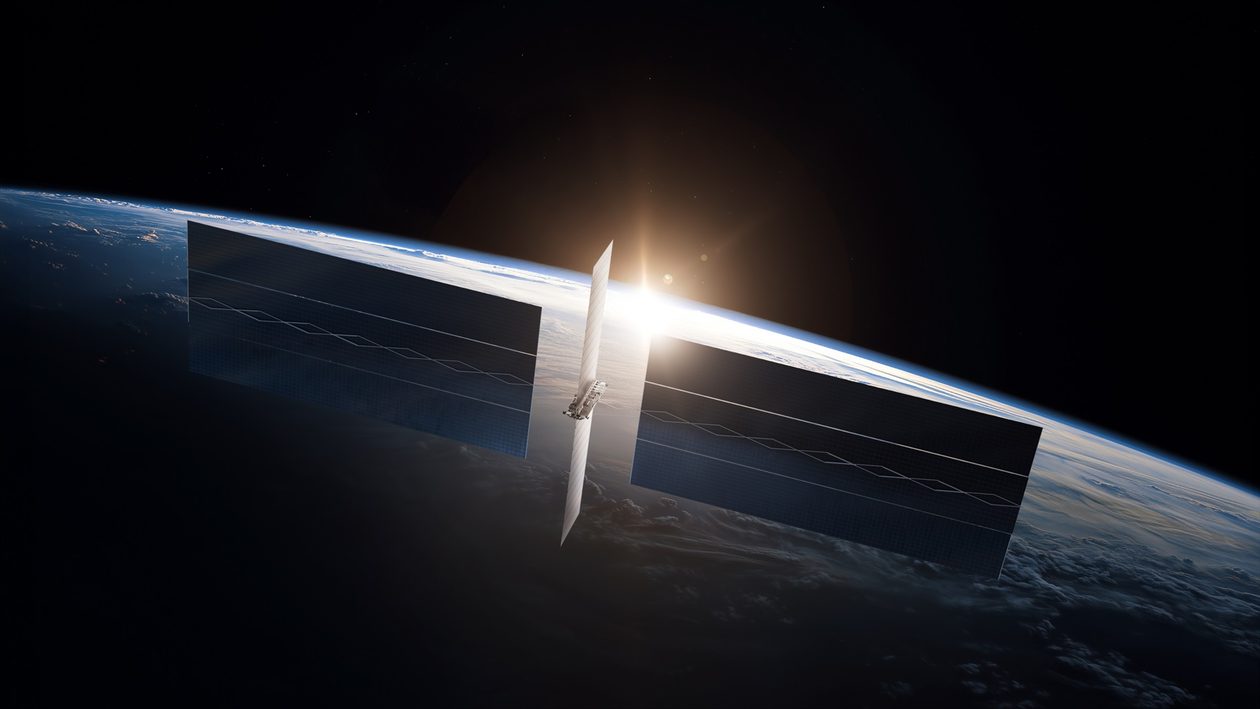
The US Federal Communications Commission on Wednesday approved SpaceX's plan to deploy up to one million 'orbital compute modules' forming a space data-center constellation called Starmind, the first authorization of its kind in US history. The first satellite must be in operation by 2033 and the full constellation by 2040; the American Astronomical Society, Viasat and Amazon's Kuiper had urged the regulator to deny the application, and scientists question cooling, space debris and light pollution.
The US Federal Communications Commission (FCC) on Wednesday (November 25) approved SpaceX's plan to deploy up to one million 'orbital compute modules' forming a space data-center constellation called Starmind, processing vast amounts of data in low Earth orbit for artificial intelligence tools on the ground. The commission called it the first authorization in US history for a constellation of data centers in space.
First satellite by 2033, full constellation by 2040
Under the FCC's authorization, the Starmind satellites will operate in orbits 500 to 1,002 kilometres (310 to 623 miles) high. SpaceX must put at least one authorized space station into operation by 2033 and add more gradually, completing the constellation by 2040. The approval carries conditions, including communications backups, regular updates and a detailed plan for orbital debris mitigation. In August, SpaceX announced a partnership with Nvidia to design the compute payload for the Starmind AI1 satellite; each Starmind satellite will carry Nvidia Rubin GPUs and Vera CPUs for data-center-class computing in space.
FCC hails the dawn of 'super intelligence'
FCC Chairman Brendan Carr said the decision 'opens a bold new frontier for the computing infrastructure needed to power America's leadership and growth', adding that 'America is leading the world into the era of super intelligence.' The commission's news release echoed the language of SpaceX's application, saying Starmind 'promises to bring the human race closer to a Kardashev II civilization - one that can harness the full power of the sun.' SpaceX chief executive Elon Musk welcomed the decision on social media, calling it 'a great asset to America and the world.'
Cooling in space 'like a thermos', scientist calls plan 'a fantasy'
Supporters say solar-powered orbital data centers could ease the biggest complaints about terrestrial data centers, including land use, strain on power grids and the water needed for cooling; space is cold and sunlit, seemingly ideal for computing. But astrophysicist Adam Becker told the Associated Press that launching a million satellites to build data centers in space is 'a fantasy' and 'not going to happen.' He explained that space is a vacuum, trapping heat inside objects 'much like a thermos', so radiating heat away faces 'basic physical limits'. Launches and reentries would also pollute the atmosphere, and collisions between large numbers of satellites could trigger a cascade of space junk, threatening weather and telecommunications satellites in low Earth orbit.
Astronomers objected; FCC says it serves the public interest
The American Astronomical Society, satellite communications company Viasat and Amazon-owned Kuiper Systems had all urged the FCC to deny the application. The society said it was 'disheartened and dismayed' by the decision, warning that the Starmind satellites would be larger, brighter and more numerous, 'visible as extremely bright objects for longer periods in the night sky', undermining decades of federal investment in astronomical facilities and 'the ability of astronomers and the public to enjoy and study the night sky.' The FCC said deploying the satellites 'serves the public interest' and that it had dismissed topics outside its authority, such as environmental concerns; it said it would continue to review other orbital data-center proposals.
What comes next
Starmind is not the only venture chasing computing in space: Blue Origin has proposed a 51,600-satellite constellation for its Project Sunrise; startup Starcloud has applied for 88,000 satellites; Cowboy Space has applied for 20,000; and Google is testing a data-processing constellation called Project Suncatcher, whose first satellites are to be launched by Blue Origin's New Glenn rocket, with liftoff planned for no earlier than 2029. The FCC's approval is only the first step - SpaceX must still show it can move data centers into orbit despite vacuum cooling, debris management and opposition from astronomers. (Sources: US Federal Communications Commission; Associated Press; GeekWire)
💬 留言
暂时还没有留言,来抢沙发!